Category Archives: Ecosystem

News about our ecosystem (environment, creatures, etc.).

Smoke and Water, Environmental Downs and Ups

When looking at the bigger picture, it sure seems like there are more “environmental downs” than “ups” at the moment (2019). Sure, there have been several small victories recently, but overall, our hyper-consumerist^ ways are still driving us on a highway to hell.

Smoke

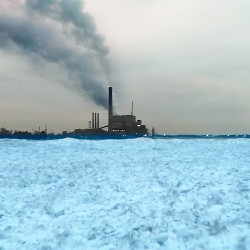
Nine years after such information was widely available, I finally got to understand just how insanely terrible sea shipping is for our planet. Consider that a single massive cargo ship puts out more cancer and asthma-causing pollutants than 50 million cars:

https://newatlas.com/shipping-pollution/11526/^

This is because these ships use a very dirty type of fuel. And there are a lot^ of cargo ships on Earth. Not all of them may be as massive as the monstrous OOCL Hong Kong^, but consider that even back in 2009, just 16 of the world’s biggest ships emitted more pollution than all of the cars on the planet combined^. And while vehicle pollution has started to improve thanks to more efficient engines and electrical cars, cargo ship pollution is almost completely unregulated and still running amok.

I remember being surprised to hear how much fuel^ an airplane uses. Then again, turns out airplanes are actually pretty efficient^ compared to a car transporting less than 3 people. In any case, all my surprise regarding airplane fuel has now been completely snuffed out by the sea of jaw-drop I’m drowning in after getting the facts on cargo ships.

And here we are thinking buying a Tesla will save the world. No. Nothing short of fully-committed activism will prevent the disastrous ecosystem changes that might will put future generations at great risk.

Big Waves

Surf’s up (pun not intended)! A 23.8 meters high wave was recorded in the Southern hemisphere. For reference, that’s about as high as a 6-stories building. And it wasn’t from a tsunami. Just good ol’ mother Earth reacting to global warming:

http://www.bbc.com/news/world-australia-44078255^

And all this nicely leads to…

Ocean Heat Buildup

This is a phenomenon which has long shadowed the true extent of global warming, because the planetary ocean gives our world a certain amount of thermal inertia.

https://www.washingtonpost.com/energy-environment/2018/10/31/startling-new-research-finds-large-buildup-heat-oceans-suggesting-faster-rate-global-warming/??noredirect=on^

As pointed in the article above, the research has seen a few corrections. Even so, there are several other studies that ocean heat buildup is a major problem, one that is seriously underestimated:

https://www.climate.gov/news-features/understanding-climate/climate-change-ocean-heat-content^

That solar panel problem few people talk about

“In November 2016, the Environment Ministry of Japan warned that the country will produce 800,000 tons of solar waste by 2040, and it can’t yet handle those volumes. That same year, the International Renewable Energy Agency estimated that there were already 250,000 metric tons of solar panel waste worldwide and that this number would grow to 78 million by 2050.”

Ugh…

https://www.theverge.com/platform/amp/2018/10/25/18018820/solar-panel-waste-chemicals-energy-environment-recycling^

How about cleaning the atmosphere?

Is global warming worrying you? Do you think we’ve run out of time? Well, here’s some good news. If we, as a species, would for once work together, we could actually achieve negative carbon emissions. This would require a massive economic shift, but it is already within our technological reach:

https://www.vox.com/platform/amp/energy-and-environment/2018/10/24/18001538/climate-change-co2-removal-negative-emissions-cdr-carbon-dioxide^

The conclusion?

We can switch technologies all we want, but unless we don’t switch (off) our way of (consumerist^) life, the ecosystem will suffer some catastrophic changes in the next decades.

Here’s a soundtrack for all that…

Skeler – Falling Apart^

[ax_meta lnimgurl=’http://mentatul.com/wp-content/uploads/2019/02/03563-SmokeWaterEnvironmentalUpsDowns-Thumb.jpg’ lnimgw=’250′ lnimgh=’250′ title=’Smoke and Water, Environmental Downs and Ups’ desc=’Consumerism's hidden costs (shipping), the dark side of solar energy, the ocean is heating up and how could we clean our atmosphere? Your February 2019 environmental debriefing is here.’]

Pesticides Harming Bees Banned in Europe – Major Win for Our Ecosystem

Good news is even better when it arrives unexpected. In a major win for our ecosystem, the European Union has banned the use of neonicotinoids^. Other than the fact that the use of such poison is another example of arrogant human interference in the environment, this category of pesticides is destroying bee colonies^ worldwide. Bees are responsible for pollinating^ a majority of our crops, so a major bee die-off would seriously impact our food supply. When it comes to respecting our ecosystem, it’s lovely how Europe leads the way!

https://www.theguardian.com/environment/2018/apr/27/eu-agrees-total-ban-on-bee-harming-pesticides^

[ax_meta lnimgurl=’http://mentatul.com/wp-content/uploads/2018/08/02998-NeonicotinoidsBeesSaved-Thumb.jpg’ lnimgw=’250′ lnimgh=’250′ title=’Pesticides Harming Bees Banned in Europe – Major Win for Our Ecosystem’ desc=’In a major win for our ecosystem, the European Union has banned the use of neonicotinoids.’]

Reef Death

“One-third of the 3,863 reefs that make up the Great Barrier Reef — the largest, most extensive reef system in the world — went through a catastrophic die-off after a searing heat wave in 2016, according to a newly published study in the journal Nature. A bleaching event in 2017 devastated even more of that reef, and the cumulative effects have killed an estimated half of the magnificent system in just two years.”

It’s a quote from the article below, a work that fits in the “doom and gloom” category. But unlike articles about Planet X, the “unavoidable catastrophic” eruption of Yellowstone or the reversal of the Earth’s magnetic poles, this is “real doom and gloom”. Corals around the world are dying at an alarming rate. This can lead to sudden, disastrous effects on the ocean ecosystem (and thus, the entire planet).

Even though a small number of coral species benefit from higher heat and acidity tolerance, the significant world-wide drop in coral density will affect oceans in ways that might seriously disrupt, among others, our food supply. It’s hard to predict how this will affect the Earth’s population. Even for those that don’t eat fish (like myself), a shortage of fish will result in increased demand (and price) for all other foodstuffs.

Personally, I quit eating fish long time ago due to the fact that most fish I can find in shops comes from waters where there is a high risk of pollution. It’s going to be a while until I can trust eating anything coming from an ocean where humans have dumped their experiments and industrial residue for centuries:

http://www.businessinsider.com/coral-reefs-great-barrier-reef-dying-from-bleaching-warming-2018-4?r=US&IR=T&IR=T^

Additional reading:

https://en.wikipedia.org/wiki/Coral#Threats^

[ax_meta lnimgurl=’http://mentatul.com/wp-content/uploads/2018/07/02993-ReefDeath-Thumb.jpg’ lnimgw=’250′ lnimgh=’250′ title=’Reef Death’ desc=’One-third of the 3,863 reefs that make up the Great Barrier Reef went through a catastrophic die-off after a searing heat wave in 2016.’]

Our Warming Atmosphere Makes Plants Less Nutritious

It is said that “you are what you eat”. That stands true not only for humans, but for everything that eats. It’s well known that at optimal temperatures and humidity, plants thrive given light and carbon-dioxide. It was considered that one of the perhaps positive effects of global warming would be that plants would grow faster. This self-balancing property of our ecosystem could even contribute to cleaning up our atmosphere, as more plants would eat more CO2. That may very well hold true, if it wasn’t for desertification^.

However, even though plants do thrive thanks to having more carbon-dioxide available, they apparently are not as nutritious. This is an extremely important finding, because, like as the article below points out, “increasing carbon dioxide in the atmosphere is reducing the protein in staple crops like rice, wheat, barley and potatoes, raising unknown risks to human health in the future”:

https://www.politico.com/agenda/story/2017/09/13/food-nutrients-carbon-dioxide-000511^

“Every leaf and every grass blade on earth makes more and more sugars as CO2 levels keep rising,” Loladze said. “We are witnessing the greatest injection of carbohydrates into the biosphere in human history―[an] injection that dilutes other nutrients in our food supply.”

Perhaps we humans can compensate for a diet comprised of less nutritious plants through various supplements, but this doesn’t bode well for our ecosystem and therefore for us. The planet is already adapting to the carbon-dioxide we’ve added into the atmosphere, but there will be [unforeseen] consequences, probably more than we can even imagine.

In closing, here’s a longer quote from the highly recommended article linked above:

Could carbon dioxide have an effect on human health we haven’t accounted for yet? The answer appears to be yes—and along the way, it has steered Loladze and other scientists, directly into some of the thorniest questions in their profession, including just how hard it is to do research in a field that doesn’t quite exist yet.

In agricultural research, it’s been understood for some time that many of our most important foods have been getting less nutritious. Measurements of fruits and vegetables show that their minerals, vitamin and protein content has measurably dropped over the past 50 to 70 years. Researchers have generally assumed the reason is fairly straightforward: We’ve been breeding and choosing crops for higher yields, rather than nutrition, and higher-yielding crops—whether broccoli, tomatoes, or wheat—tend to be less nutrient-packed.

In 2004, a landmark study of fruits and vegetables found that everything from protein to calcium, iron and vitamin C had declined significantly across most garden crops since 1950. The researchers concluded this could mostly be explained by the varieties we were choosing to grow.

Loladze and a handful of other scientists have come to suspect that’s not the whole story and that the atmosphere itself may be changing the food we eat. Plants need carbon dioxide to live like humans need oxygen. And in the increasingly polarized debate about climate science, one thing that isn’t up for debate is that the level of CO2 in the atmosphere is rising.

[ax_meta lnimgurl=’http://mentatul.com/wp-content/uploads/2018/05/02862-WarmingAtmospherePlantsNutrition-Thumb.jpg’ lnimgw=’250′ lnimgh=’250′ title=’Our Warming Atmosphere Makes Plants Less Nutritious’ desc=’Increasing carbon dioxide in the atmosphere is reducing the protein in staple crops like rice, wheat, barley and potatoes, raising unknown risks to human health in the future.’]

The Importance of Parasites

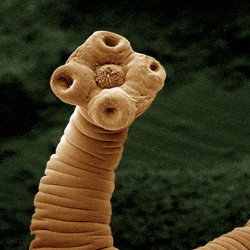
Ah, parasites! Those pesky little critters that suck the life out of various other organisms. But guess what, they’re more important than most people think. According to a new study, anywhere between 10% to 30% of the world’s parasitic species might go extinct due to global warming by 2070. This might seriously (and negatively) disrupt the ecosystem via the domino effect:

http://www.smithsonianmag.com/science-nature/parasites-are-going-extinct-heres-why-thats-a-bad-thing-180964808/^

Probably this will add to the list of horrors^ that awaits us thanks to what we’ve done to the planet.

[ax_meta lnimgurl=’http://mentatul.com/wp-content/uploads/2018/02/02697-ImportanceOfParasites-Thumb.jpg’ lnimgw=’250′ lnimgh=’250′ title=’The Importance of Parasites’ desc=’According to a new study, anywhere between 10% to 30% of the world's parasitic species might go extinct due to global warming by 2070.’]

The Latest (and Greatest) on Climate Change

Thanks to climate-change skeptics, we’ve been fortunate to have a lot of talented, driven people doing great research that proves just how real and dangerous climate change really is. Unfortunately, even with the best of intentions, the media has turned the frequent updates from the scientific community into a deluge of climate change news, which led to the audience developing a sort of selective hearing when it comes to this topic. “Yeah, yeah, we’ve heard it all before”. However, here on Mentatul I need to address dozens of topics while keeping at roughly one post per week. This forces me to be very selective about what I post. So yes, this one is important.

Two articles are the reason for this post. The first one is about farts. Cow farts to be precise. The methane that they contain, to be even more precise, and how it affects global warming:

https://www.forbes.com/sites/samlemonick/2017/09/29/scientists-underestimated-how-bad-cow-farts-are^

And then I read this other article^ that lead me to another, even better article, which provides a rather appalling prognosis for our future. And it’s not even “the worst case scenario”. I’m sorry to say, but given all the statistics I’ve seen recently, it seems to be that the following article is presenting a future that has a high probability of becoming reality. And I see very few governments do anything about it, especially when it comes to the world’s biggest polluters.

I am tempted to say that you shouldn’t read this if you’re currently feeling good with your life, because this piece is a real downer. But it is also one of the most relevant and well-written articles on climate change that I’ve come across in the past couple of years. This is an alarm bell made of pure gold:

http://nymag.com/daily/intelligencer/2017/07/climate-change-earth-too-hot-for-humans.html

I consider myself lucky to still have running water, electricity and generally healthy food available. In the same time, I feel it is almost disrespectful towards my child to enjoy all this without doing something about the immediate (speaking on a generational level) danger we’re in. I plan to do whatever I can to raise awareness about this topic. It’s never too late.

[ax_meta lnimgurl=’http://mentatul.com/wp-content/uploads/2018/01/02618-LatestGreatestClimateChange-Thumb.jpg’ lnimgw=’250′ lnimgh=’250′ title=’The Latest (and Greatest) on Climate Change’ desc=’Thanks to climate-change skeptics, we've been fortunate to have a lot of talented, driven people doing great research that proves how real and dangerous global warming really is.’]

A Minute to Breathe

Sometimes art is the best way to get a point across. I could say much more, but let’s leave it at that. See the video, get the message, spread the message (if you care about it):

https://www.youtube.com/watch?v=wwwQ4uVGGSE^

[ax_meta lnimgurl=’http://mentatul.com/wp-content/uploads/2017/09/02196-AMinuteToBreathe-Thumb.jpg’ lnimgw=’250′ lnimgh=’250′ title=’A Minute to Breathe’ desc=’Sometimes art is the best way to get a point across.’]

The Slow Loris and the Pet Industry

I have to confess that this one caught me completely off-guard. During the past years of course I’ve seen several videos featuring the ridiculously sweet Slow Loris. Little did I know about the horror hidden behind the Loris pet trade. The website below explains the crime being committed in no uncertain terms (beware, the video may be difficult to stomach, as it should be):

https://www.ticklingistorture.org/^

This is the same video as the one from the website, provided here as back-up:

https://www.youtube.com/watch?v=otTNxR8C4uE^

In case you don’t want to watch the video, here’s a page that explains things in text mode:

https://www.internationalanimalrescue.org/how-slow-loris-became-someones-pet^

I’ve signed the pledge to never encourage this heinous trade. And as a matter of fact, please give me a pledge where I can sign to not have any pets. Forcing any creature to live in an enclosure much smaller than its usual habitat is, in my opinion, unfair. I’m (not) sorry to break it, but this applies to the super-common dogs and cats.

I also don’t condone the actions of people who sterilize or cut parts from their pets “because it’s for their own good”. Yes, it’s for their own good because they’re prisoners and owners don’t want them to (hear them) “suffer” while their procreation instinct is not met. This human interference in the ways of nature has to stop sooner or later.

I have nothing against animal companionship that is gained naturally and where the animal has freedom to move inside a large habitat. Creatures shouldn’t be bound by the owner’s schedule of allowing them droplets of freedom (often, even those are by the end of a leash).

There is no delicate way of saying it: the pet industry (food and chemicals producers, slave “cute animals” shops, etc.) reeks of ignorance and lack of respect towards other life-forms. In general, our attitude towards our ecosystem is one of this species’ worst crimes.

[ax_meta lnimgurl=’http://mentatul.com/wp-content/uploads/2017/07/02032-SlowLorisPetIndustry-Thumb.jpg’ lnimgw=’250′ lnimgh=’250′ title=’The Slow Loris and the Pet Industry’ desc=’Here's the horror hidden behind the Loris pet trade.’]

Creatures of the Plastic World

It’s quite well known by now that our oceans are slowly turning into a toxic stew of plastic with sauce of life-threatening industrial residues. I recently read about why birds are attracted to plastic residue:

http://www.csmonitor.com/Science/2016/1109/Why-seabirds-find-plastic-debris-so-yummy^

It’s actually quite similar to why fish tend to find plastic so yummy as well:

http://www.bbc.com/news/science-environment-36435288^

Apparently, if we keep dumping our junk in the ocean at this rate, we’re well on track to have more plastic than fish in our oceans by 2050:

https://www.theguardian.com/business/2016/jan/19/more-plastic-than-fish-in-the-sea-by-2050-warns-ellen-macarthur^

This reminds me of something the genius comedian George Carlin has said: “that’s why the Earth has created us. It wanted plastic for itself”. Here’s a full 9 minutes of George Carlin awesomeness (I don’t necessarily agree with everything he says, for example I think we could treat our environment with more care, for our own sake, but for the most part, he’s spot on!):

https://www.youtube.com/watch?v=dNknQCUBWG4^

[ax_meta lnimgurl=’http://mentatul.com/wp-content/uploads/2017/02/01607-CreaturesPlasticWorld-Thumb.jpg’ lnimgw=’250′ lnimgh=’250′ title=’Creatures of the Plastic World’ desc=’It's quite well known by now that our oceans are slowly turning into a toxic stew of plastic with sauce of life-threatening industrial residues.’]

Zika Used as an Excuse for Releasing Genetically Engineered Mosquitoes

According to some researchers, the Zika virus, which causes the Zika fever^, can cause microcephaly and other brain malformations in some babies if the mother is infected during pregnancy. However, there have been indications that there might be other causes for the infants’ malformations, such as the parents’ exposure to toxic pesticides. In 12000 Zika-infected Colombian pregnancies there wasn’t a single case of microcephaly. Unfortunately the sources for this last information are unreliable and contested, so take this with a grain of salt.

While the jury is still out on what is causing microcephaly, let’s take a look at one solution that’s being considered for fighting the spread of Zika:

http://edition.cnn.com/2016/08/05/health/fda-approve-gmo-mosquito-zika-florida/^

OX513A is a genetically engineered male mosquito produced by a British company. The USA is tentatively playing with the idea of releasing this species into the wild with the purpose of controlling mosquito populations. This male mosquito passes a gene that makes females’ offspring die before reaching adulthood. It may even work.

As is often the case, humans scramble to find quick solutions for their own speciest interest, tampering with complex ecosystems about which they barely have developed an inkling of understanding. And also as is often the case, this might end blowing up in our faces.

Then again, the people working on such projects are top scientists so they know what they’re doing, at least momentarily. But that’s the thing. Momentarily, we’ve always been good at patching things up. It’s the long term effects^ that usually end up hurting us the most.

Bioengineering plants is one thing, but insects are highly mobile and I just don’t want to imagine what might happen when a certain mosquito’s genetic material combines with another’s, producing who-knows what sort of super-mosquito. This will probably not happen, but at times I can’t help thinking that our playing with the ecosystem is at best risky and at worst misguided, arrogant and deadly.

Fortunately, the proposal to trial OX513A in the wild will most likely be voted down, but the very fact that they’re considering it, is worrying – also from an ethical perspective. What right do we have to decide if another species can or cannot have offspring? Perhaps we’re taking “survival of the fittest” a bit too far?

[ax_meta lnimgurl=’http://mentatul.com/wp-content/uploads/2016/09/00951-MaleMosquitoZika-Thumb.jpg’ lnimgw=’250′ lnimgh=’250′ title=’Zika Used as an Excuse for Releasing Genetically Engineered Mosquitos’ desc=’Let's take a look at one solution that's being considered for fighting the spread of Zika.’]