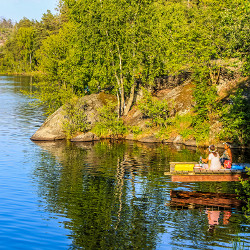
Tag Archives: stockholm

Stockholm – North’s Blue Emerald

As the birds of steel approach the city from the Baltic Sea, the lucky travelers are treated to one of the most beautiful panoramas this planet has on offer. Thousands of little green islands scatter away from the Scandinavian mainland, emerald shards sinking into blue depths. Stockholm itself is not much different from the archipelago leading up to it, except that there’s more green than blue that surrounds this well-planned, clean and cozy capital.
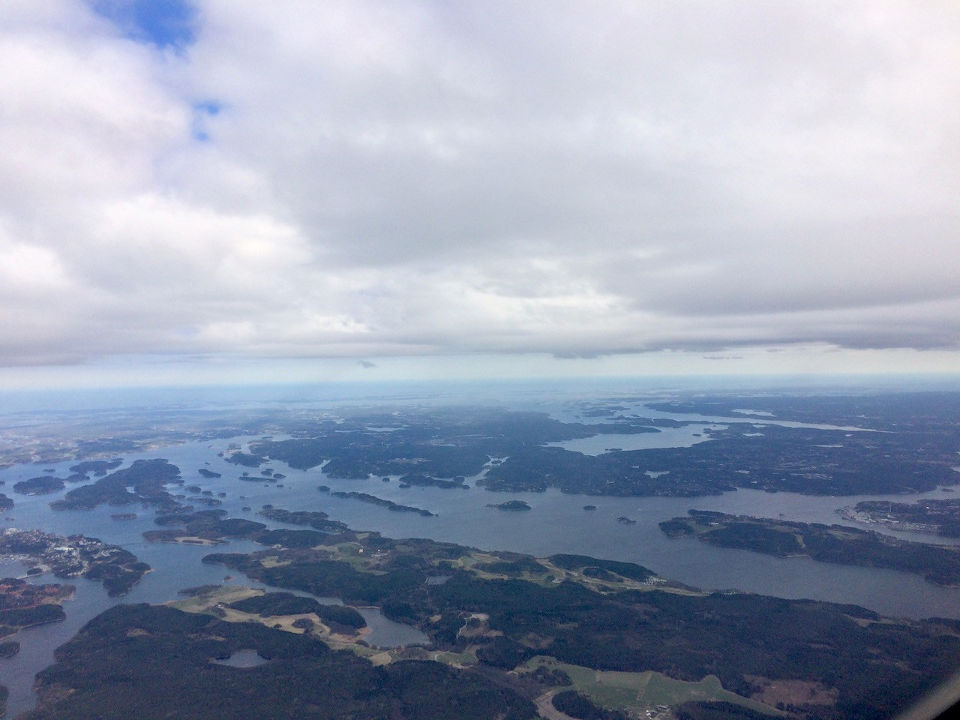
This picture of the Stockholm Archipelago was taken by another traveler. I saw it in better conditions (clear sky, low sun, golden light).

I was one of those lucky travelers when my plane approached the Arlanda airport some years ago during a clear-skied summer evening. I still remember the feeling of grandeur that crept up my spine as the landscape below was tempting the adventurer in me. Join me on a tour of the city (and surroundings) that I’ve felt as a “home” even before I knew it actually will become my home (I’ve been here for almost 9 years now).

Arlanda Terminal 5, copyright Philip.

I arrived at the airport at around 20:00 and was picked up by Andrei, the man I’ll always be grateful to for giving me the opportunity to be here. The sun was still hours from setting since this was mid-July, close to the summer solstice. To give you an idea what this means, on the date when I arrived, the sun rose at 03:55 and set at 21:50, with a total day length of 17 hours and 54 minutes.

I’m thankful for whoever chose dark amber as the predominant color for the area of Arlanda’s Terminal 5 where I exited the airplane. It resonated with the golden light of the late sun, creating a warm, cozy atmosphere as I was walking fast past deserted gates.

Sankt Eriksplan, from the window of my first accommodation in Sweden.

The image above represents Stockholm very well. It’s a clean city with ample of green spaces, populated by well-maintained buildings with warm-colored facades. There are several large parks in the center of the city. Vasaparken is one of them and is situated right here at Sankt Eriksplan.

Not a lot of traffic during the summer.

A lot of Swedes leave the cities during the summer, so it’s easy to take pictures with seemingly deserted streets. The traffic infrastructure of the city has been built with plenty of wiggle-room in mind, even though in the past years it has begun to struggle. However, an amazing public transport system (among the best in the world) is saving most people from wasting time being stuck in traffic. Here’s the route planner^ (complete with price listings). Rechargeable travel cards can be purchased at SL centers in main transport hubs or, even easier, at any Pressbyran^ shop. And here’s a map of the metro^.

One of the tunnels leading down into the new commuter train station opened in 2017. Get yourself 20 minutes and explore this marvel of engineering.

But let us leave the city for a while. One of the best things a traveler can do in the Stockholm area is to get a boat ride through the gorgeous archipelago. My personal favorite is a trip to Sandhamn using a special kind of boat that takes the scenic route through parts of the archipelago where larger boats can’t fit. This is a day trip that is usually available from May to September. Make sure you don’t confuse this with the “usual” trip to Sandhamn, which makes use of faster boats, but goes via another route.

The Swedes sure know how to build in harmony with nature.

The trip towards the archipelago showcases some of the most beautiful houses I’ve ever seen. I have a lot of appreciation for the effort that was put into integrating human dwellings with the natural habitat. Of course, there are even better ways to do it, but this is a step in the right direction. It’s an example of architecture that is respectful towards the environment. But let’s not get into how much a house like that costs.

The Strömma Canal bridge as it lifted to allow our boat’s passage.

Towards Sandhamn, the vessel goes through the Strömma Canal^ which is very, very narrow. The guide will probably tell you about the devastation^ that a Russian fleet brought to the east coast of Sweden almost 300 years ago. The Russians suffered a humiliating defeat and were stopped somewhere around these parts.

Beautiful scenery on the way to Sandhamn.

Eventually, human civilization falls behind and nature reigns. Boats usually make brief stops on some of the permanently inhabited islands, sometimes only to drop newspapers or mail. There’s not a lot of sand on these rocky formations so beaches are in short supply, but Sandhamn is called like that for a reason.

Vaxholm, the “capital” of the Inner Stockholm Archipelago.

Another good place to visit is the island and fortress of Vaxholm^. The city of Vaxholm is reachable by bus thanks to a network of bridges. There’s a cheap ferry that makes the connection with the stocky fortress. The island of Grinda^ is another good destination, especially for those that focus on nature rather than architecture.

Valborg celebration in Gamla Stan (the Old Town).
People with torches in Gamla Stan (the Old Town).

And now let’s get back to Stockholm. This is not a picture of a riot, even though there have been some of those^ as well (definitely not something usual, but there are dark moments in every city’s history, especially when it comes to capitals).

The Valborg bonfire.

This is how Swedes celebrate Walpurgis^: with a huge bonfire (among other things). We’ve attended this one in 2010, during our first full year here in Stockholm.

The “world’s longest art gallery”.

The Stockholm metro has been called “the world’s longest art gallery”. Indeed, there’s a lot of impressive, funny and perhaps even weird^ things to see when exploring the city via its more than 100 metro stations.
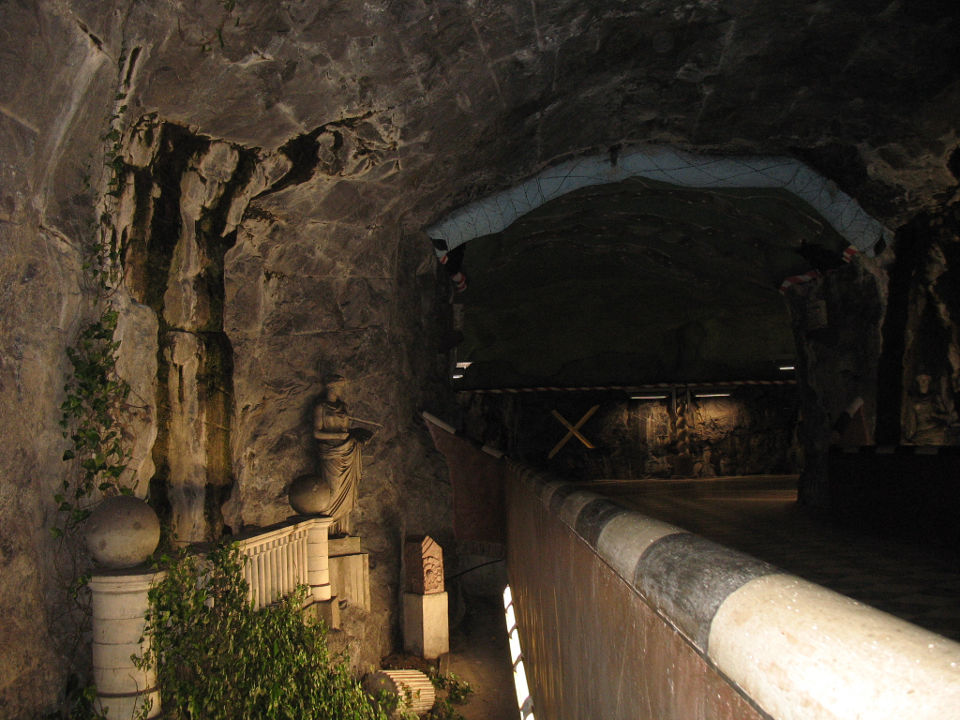
The station at Kungsträdgården is one of the most impressive.

I couldn’t find a better picture of the Kungsträdgården station, but it doesn’t matter. There are several online articles^ that feature good selections^ of Stockholm metro art^.

Awwww… isn’t that cute? Hi Frida! Hi Carl Philip!

One of the first things I noticed when I traveled with the metro here is that these guys actually went through the trouble of naming every single train car (each train has up to 3 long cars). How could I not fall in love with such a city?

Here’s more metro art.

The trains are quite long and very well maintained. There’s also an impressive network of buses that reaches almost any place you might want to go throughout the Stockholm metropolitan area. They are also extremely punctual, except when it snows a bit too much^.

Random fact time: tap water here is among the purest in the world.

In the market for a guitar?

Art, and especially music, is blossoming in Stockholm. A newly renovated^ music high-school ensures that future generations have ample opportunities to develop their skills. Creatives are pouring into and swarming around the city. The fact that the capital has become a regional technology hub contributes to the artistic growth.

Hellasgården. Not to be spelled “hell as garden”.

All around Stockholm, parks and nature reserves abound. One of our favorites is Hellasgården, south of the city, easily reachable by bus (15 minutes) from centrally located public transport hub, Slussen. Follow the marked path to circle the Källtorp lake. It takes about 1.5 hours. Beautiful views are waiting for you to behold.

Oh, hello there.
Oh, hello there.

There’s a small touristic village here, featuring a restaurant, several cottages and a sauna. Sporting events are organized all year-round. In the winter, they make a skating rink and one can circle the lake while steaming, naked people run out of the sauna and throw themselves into the ice-cold water at a specially maintained area next to the shore.
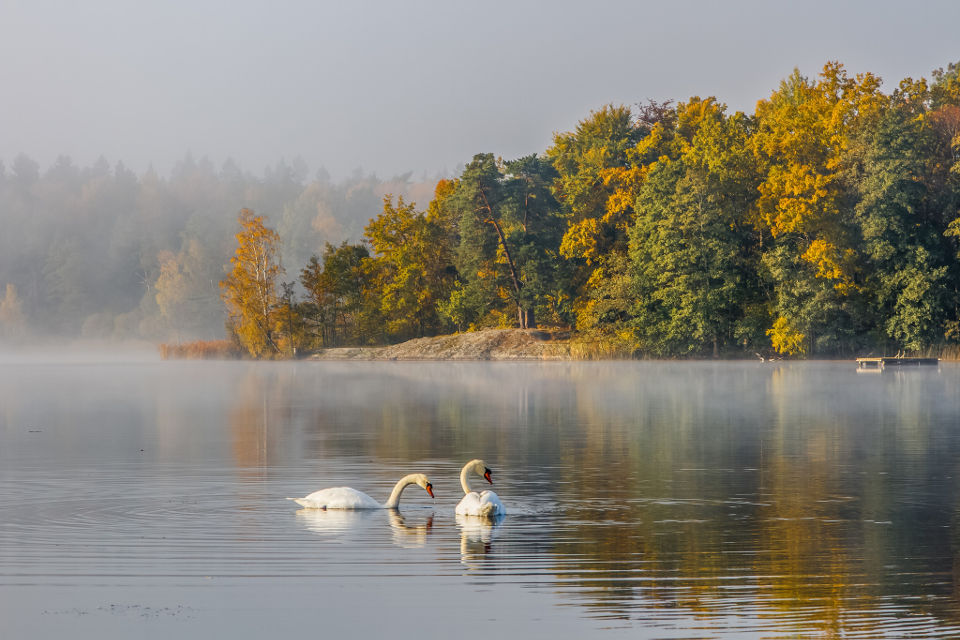
The Flaten lake and nature reserve.

Also one bus away from central Stockholm is Flaten, a lake that supposedly has the best water quality around the capital. The accompanying nature reserve is swarming with people gathering mushrooms during certain autumn weekends. There are two small sand beaches that are quite busy during the summer.

Raising of the Maypole during Midsummer day at the Tyresta national park.

Midsummer day is very important for Swedes. Close to Stockholm lies the Tyresta national park and castle. We’ve been lucky to celebrate Midsummer there in 2010.
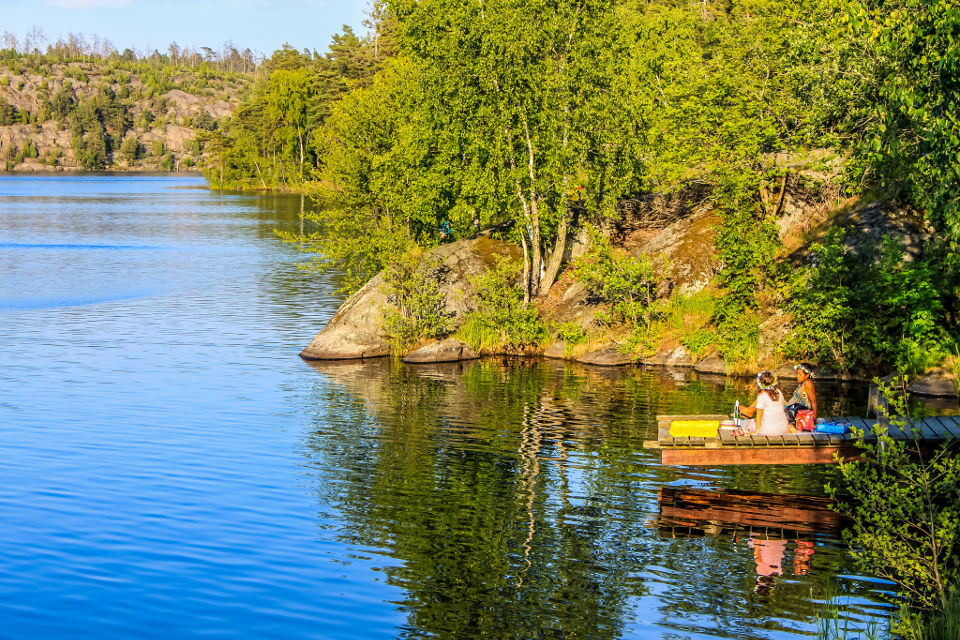
Midsummer day at Hellasgården.

Do keep in mind that what you’re seeing above is just 15 minutes away from a bustling capital (in Scandinavian terms). There’s no traffic, no hubbub, just forest, rocks, water and positive vibes. Oh, and clean air, just like in the rest of Scandinavia as a matter of fact.

Autumn at Hellasgården.

But wait a minute, isn’t this city supposed to be “somewhere in the North”? Where are the polar bears roaming on the streets, picking off half-frozen people from bus stations? Don’t worry, I haven’t been avoiding the subject of winter.

Winter, NOT as advertised.

Thanks to its proximity to the Baltic Sea and to global warming, Stockholm winters aren’t that tough, at least not for me. My home town in Transylvania experiences more snow and colder winters, albeit not as dark and not as long. Yes, it gets quite dark, with the day length dropping to just over 6 hours during the winter solstice.

But when it snows…
But when it snows…

Sure, there are times when we get buried a bit^, but remember that thing I said about an awesome public transport system? Because so many people rely on it, the Swedes won’t let themselves be buried for too long.

… it’s magical.
… it’s like in the fairy tales.

Personally, I love winters here. It’s the coziest time of the year. Almost everybody puts something shining and colorful in the window. It’s a time for snuggling in bed with a warm cup of tea and enjoying a good movie, or for doing some quality gaming in the dark. There are lots of indoor swimming pools, climbing arenas and many other places one can burn calories and time.
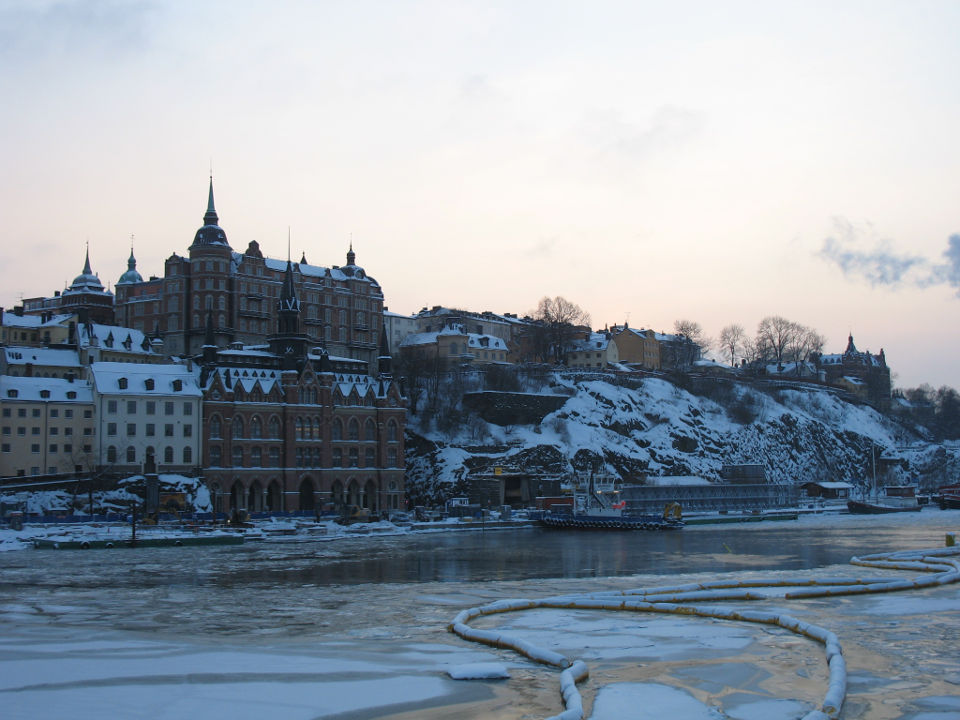
Stockholm in the winter.

Cold weather? As the (sometimes annoying) saying goes: “There’s no such thing as bad weather, only bad clothing”. Those that visit during the winter should definitely pack underpants and thick jackets. In Stockholm it’s not the temperature that gets you, it’s the humid wind courtesy of the Baltic Sea. The thermometer rarely goes under -15 Celsius and usually hovers around -10 to -5, sometimes even around 0.

Spring explosion.
Spring explosion.

Spring hits sometime around mid-April, give or take half a month. Yeah, that’s a long winter, although there are several warm days scattered through November and March. When spring does arrive, it’s an explosion of happiness. Stockholmers pour out and bask in the sun on every bench around town, occupy every sidewalk and find every excuse to be out in the light.

Celebrating spring over at Kungsträdgården.

Thanks to all the green spaces, it’s a city where one can truly celebrate spring. We try to walk underneath the blossoming Japanese cherry trees at Kungsträdgården every year. At this same location, during winter, they set up a skating rink. Kungsträdgården hosts various gatherings year-round (concerts, exhibitions, commercial and political events).
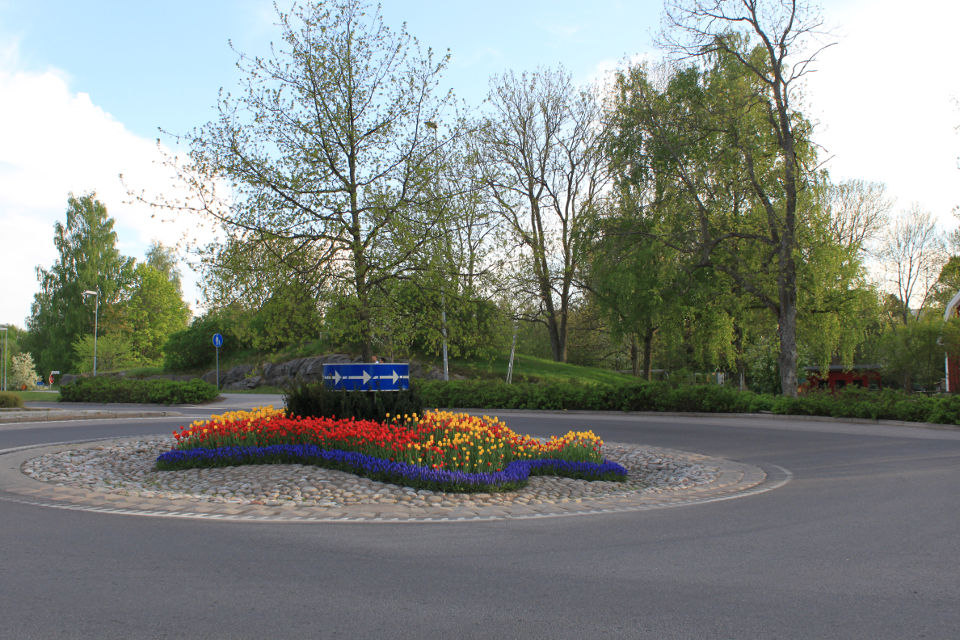
A very usual roundabout somewhere in a Stockholm suburb where this writer might live.

Here are some other fun things one can do in Stockholm: get a subscription for the city bikes^. It’s cheap and there are lots of pick-up & drop-off points. Go visit the Drottningholm palace or the Haga park. Enjoy the awesome view and in the same time have a tasty dinner up in the Kaknästornet television tower^. And I can’t forget my favorite museum: Fotografiska^, located at walking distance from Slussen. And since you’re in the area, don’t miss the chance to eat at one of the best vegetarian restaurants in the Swedish capital: Herman’s^.

The changing of the guards at the Royal Palace.

In Gamla Stan (the Old Town) one can find such points of interest as the Nobel Museum (overrated in my opinion) and the Royal Palace (not terribly impressive either). And of course, there are several streets filled to the brim with overpriced cafes and souvenir shops. There are two restaurants I can recommend in the area: the vegetarian Hermitage and the absolutely fabulous Viking-themed Aifur^.

Every day around noon (depending on weekday and season) one can enjoy the changing of the guards with military fanfare. The Royal Palace is only used by the royal family during official events. They normally reside at Drottningholm. Oh, speaking of royalty…

The closest we ever got to royalty.

This is a picture of King Carl XVI Gustaf and Queen Silvia that we took during the Swedish National day in 2010. They crossed barely five meters from where we were standing.

Royal guards.
Royal guards.

Go on a promenade along the famous Strandvägen and don’t be surprised if you see people riding horses (not necessarily the royal guards). As you walk on Strandvägen coming from the center of Stockholm, you will find Djurgårdsbron, the bridge over to Djurgården, which is the island hosting some of Stockholm’s most important attractions.

Blurry Vasa (I had a smudge on my lens and it ruined about half a day worth of pictures).

The Vasa Museum^ is one of the most visited museums in Scandinavia for good reason. It’s built around a huge warship that sunk in what was a shameful failure for the Swedish naval forces. However, fast forward 400 years and the Swedes have turned it around into one of the best museums I’ve been in (and which probably more than paid for the loss of the ship, the expenses to recuperate it and some jokes about the Swedish navy). Well planned and organized, the Vasa is a must-see if you’re into going to museums.

The Nordic Museum. The Vasa Museum is visible behind it. Picture taken from Wikipedia, Creative Commons license.

And while you’re at it, make sure you at least go into the Nordic Museum for a couple of minutes. It’s situated right next to the Vasa. It’s a very impressive structure. The museum itself is excellent if you’re interested in the history of Scandinavia all the way from ancient times.

Make sure you ride the Free Fall Tilt (without your shoes on! You’ll understand why when you see it). Picture taken from Wikipedia, Creative Commons license.

On Djurgården you can also find the Gröna Lund^ amusement park, open spring-autumn. On most late afternoons they also host a concert, sometimes featuring pretty famous names. A beautiful park surrounds Prince Eugene’s Waldemarsudde^, an art museum. Right across from Djurgården you can find the Sea History Museum^, the Technical Museum^ and the Ethnographic Museum^. With this many attractions and so much nature all around, the Djurgården area offers plenty of opportunity for charming walks.

Stepping back in time at Skansen.

Also on Djurgården you can find the Skansen open-air Museum^. It’s a recreation of a long-gone Sweden. Year-round, the employees of the museum illustrate life as it was a long time ago. They walk around and go about their business in the exact same clothes people here were wearing hundreds of years ago. Enter one of the many cottages and see them work iron, glass and furs, or listen to them play the violin and sing folk songs during the winter, sitting by the fireplace. There are many events for family and children at Skansen.

Water mill.
Water mill.

They either re-created or brought entire structures from all over Sweden. The museum covers a large area so you can consider it a day trip. There’s also a zoo featuring animals from Sweden. Some of them are kept in decent conditions while others have very little living space, something that really doesn’t sit well with me.

Old dwelling at Skansen, featuring the Nordic Museum far in the background.

There is an even worse zoo at the bottom of the park where they caged exotic animals. It is at that zoo where a couple of years ago it struck me more intensely than ever just how terrible these places are. Inside one of the “large” enclosures I saw two monkeys perched next to one of the few windows of the enclosure, looking outside towards a freedom they will probably never experience.

The place is contradictory to the Swedes’ general respect towards animals and the environment. But having a zoo is still considered around the world as providing some sort of “educational value”, despite the fact that it also presents children with a skewed image of reality – that of animals seen as some sort of play-things or curiosities for us to catalogue. I feel that this is more harmful than whatever is gained by seeing an animal up-close rather than in a documentary. And that’s it for today’s ethics lesson :).

The cloudy ballet.
The cloudy ballet.

Millesgården^ is another good museum with plenty of open-air art. It is situated on the island of Lidingö, easily accessible with public transport. It’s mostly focused on sculptures, some of them appearing to defy the laws of nature (but it’s all just physics).

Reaching for the sky at Millesgården.

Stockholm is a safe city given its size and cultural diversity. With that in mind, yes, there are a couple of neighborhoods that I would recommend staying clear of: Tensta, Rinkeby and Husby. But there really isn’t any major risk if you mind your own business. Nothing on the scale of what you can get yourself into in (much) bigger cities such as Paris, London, Rio or New York.

Enjoying a day out at sea.

Last I heard, about one in every seven Stockholmers own a boat. I think a better statistic is that seven out of ten people speak English here. Half of them speak it very well.

Stockholm peoples (a paraphrasing of Alan Watts’ expression that just like the apple tree apples, the Earth peoples). Those are my wife and son in that picture.
Stockholm peoples (a paraphrasing of Alan Watts’ expression that “just like the apple tree apples, the Earth peoples”). Those are my wife and son in that picture.

I am happy to say that I consider myself lucky to have been shaped by this city. No matter what my future holds, I am fortunate to have lived here for almost 9 years and counting. I arrived here as a stressed-out Romanian immigrant. This city and its inhabitants worked miracles on me. Together with my new-found home I also had the courage to start a family, something that Sweden is wonderful for (but more on that in a future article).

Stockholm is also quite contradictory at times. It is a place that offers many temptations and a lot of Swedes have fallen prey to the hyper-consumerism push^ coming from the United States, a country they seem to look up to for reasons I can’t really comprehend. And yet, it is a place that encourages personal evolution and reinvention. Like anything in life, it is what you make it. For me, Stockholm is the place I was born again.

My proposed soundtrack for reading this text:

Wardruna – Dagr^

Fever Ray – Keep The Streets Empty For Me^

[ax_meta fbimgurl=’http://mentatul.com/wp-content/uploads/2018/02/02626-StockholmNorthernBlueEmerald-Share.jpg’ lnimgurl=’http://mentatul.com/wp-content/uploads/2018/02/02626-StockholmNorthernBlueEmerald-Thumb.jpg’ fbimgw=’1170′ fbimgh=’350′ lnimgw=’250′ lnimgh=’250′ title=’Stockholm – North's Blue Emerald’ desc=’Here are the best things to see and do in this clean and modern city surrounded by nature reserves and sea.’]

Once upon a Snowy November Day in Stockholm

Our neighborhood got dressed in white earlier than usual this year. We woke up to the beautiful dance of snowflakes waltzing to join their fallen brethren upon the immaculate lands below. I felt happy, as if I knew that an amazing day was about to unfold. Maybe I read it in the snowfall. Winter’s white can hide more than just the colors below. What if snow found a way to hide time from us as well? Then perhaps voices from the future reading these words whispered loud enough for me to hear their echoes.

My wife and I rely on buses to get to work. A quick weather forecast check combined with what we saw outside yielded the natural conclusion that we should work from home today. Crina, however, was quite determined to make the trip towards central Stockholm.

She left the apartment at 8:40, hoping to catch either of the two buses that use separate routes to reach the city. I watched her from our window, a small figure wading through the snow together with our unborn 7-month old. The bus arrived in the station just seconds before she could see that part of the street. I cringed inside when I saw her trying to make a run for it only to soon realize she’ll have to wait for the next bus.

While I was initially determined to stay at home, a combination of factors led me to do the opposite. I felt like on this day I should join her in Stockholm. There was also an important project meeting scheduled for the afternoon. Besides, snowing means “wonderful weather” in my book. Better experience it fully. So, I dressed as fast as I could and went out at around 9 o’clock.

The number of people waiting in the station was not a good omen. It smelled like traffic chaos. It smelled like delays with a charming aroma of cancellations and a garnish of cursing the gray clouds that were sieving snow with relentless determination. I got on the bus anyway, knowing that at least I’ll be around friends and family sooner or later.

Challenge accepted!
Challenge accepted!

The northbound motorway was looking surprisingly well, all things considered. Turns out my wife had taken the different route, through Sickla, a neighborhood situated immediately to the south-east of Stockholm. While I was making my way into the city from the south, she reported back that her bus was stuck somewhere between Sickla and our own town of Älta. I was far luckier, managing to get all the way to the metro station with less than ten minutes of delay. From there, I had no problems reaching work, where people were busy making sense of the election results over in the USA.

One hour later, Crina was still stuck in the same bus. She was feeling quite entertained by the situation. It was hard not to, with the hypnotic dance of snowflakes promising cozy afternoons and sweet holidays. But after two hours of sitting in the same bus and advancing less than a kilometer, impatience started to gnaw its way through her armor of child-like winter enthusiasm.

Hundreds of years after the ice age, aliens start finding these snowed-in buses

Meanwhile, I enjoyed a beautiful walk outside together two friends as we went to grab lunch at around 11:30. Stockholm was slowly but surely getting snowed in. I felt a bit guilty because despite the majority’s displeasure with the weather, my enthusiasm was growing at the same pace as the streets were becoming harder to navigate. We later found out that this had been the snowiest November day in 111 years.

It shouldn’t come as a surprise then that my wife was stuck in the same bus when my mates and I got back at work. After almost three hours there, hunger and thirst became issues. As fate would have it, the bus had made it quite close to a major shopping center, so I advised her to bail on the attempt to reach the office and make her way to a restaurant until traffic resumes.

Traffic didn’t resume. In fact, it got worse. Even the bus line I had used to get to work during the morning got cancelled. Having spent about an hour in a restaurant, Crina made an attempt to at least get back home. After waiting for 40 minutes in a station, she eventually managed to get on another bus. The vehicle managed to travel about two centimeters in half an hour. She went back to the Sickla shopping mall.

All buses got cancelled. We were now officially stranded in Stockholm. And judging by the weather forecast, this wasn’t going to go away anytime soon, so I started planning for a way to get us home that didn’t involve rubber wheels. Suspecting my wife won’t enjoy going through this alone, I planned to go get her from Sickla using the metro and then jumping on a commuter train. The railroad seemed to cope quite well for now. It also presented an opportunity to get home by using the metro to reach a neighboring town. From there, there would be a 40 minutes’ walk to our home in Älta.

Guess why the buses got cancelled...
Guess why the buses got cancelled…

I busted out of the office at around 15:45. The metro had some delays, but nothing cataclysmic. I managed to squeeze in the first one that arrived in the station. Rarely have I seen a Swedish metro packed to such a degree, but I wasn’t taking any chances waiting for the next one. Twenty minutes later I was back at Gullmarsplan, the train station and major commuter hub where I had been during the morning. I could already feel the confusion settling in among fellow travellers, as sure as the snow was burying their hopes of getting home in time for dinner.

The commuter train between Gullmarsplan and Sickla had moderate delays, but I was lucky and there was one arriving at the platform just as I rushed down the stairs in my usual “controlled-crash” fashion. I knew we have a long way to get home, but instead of this dampening my enthusiasm, it enhanced it. Somehow, I felt it will all be fine, so I tuned my inner radio to the “romantic winter” frequency. And so, I headed into the black Nordic afternoon on board the commuter train, sliding through the snowflakes towards Sickla where Crina was waiting for me.

I double-checked with a fellow traveler that the train’s end station was as close as possible to the Sickla shopping center, also telling her about my railroad-only plan to get home. She assured me that it was the best alternative to get to Älta given the weather outside. Then, with barely two stops to go, the train driver announced something in Swedish. It didn’t sound good.

Given the poor state of my Swedish at the time, I asked another fellow traveler what the driver had said. The passenger wasn’t worried. The announcement had been about a mere 3 minutes delay ‘til departure due to another train being in the way. I didn’t trust the estimate, so I asked yet another traveler how far are we from the end station. Just a few hundred meters was the answer.

The Swede who had translated the driver’s announcement for me said he overheard that I was going to Sickla. He offered to walk together with me to the shopping mall, saying he’s headed to a train station located nearby. Just like that, we both decided to leave the train and walk the rest of the way.

We connected like two good friends that haven’t seen each other in a while. I learned he’s working in the same field as I do – information technology. It got better. He was a manager looking for work. As luck would have it, my employer was actually looking for managers at the time. He had heard about the company I worked for but still welcomed my insider information, namely that I was very happy there and working alongside some fantastic brothers and sisters.

There we were, appreciating this beautiful black & white Swedish afternoon, talking about children and life in general while snowflakes were congregating on our clothes. Only when we parted did we bother to exchange worldly details. It was as if only then we realized that we’ve just met fifteen minutes earlier.

As usual when out of the ordinary things happen, humans tend to become more social. I’m sure this adaptation has gotten our species out from more than one mess in the past. It’s even better when two people who are natural communicators meet, which I believe was the case on this day. Looking back, there was something more to it I think, a sort of compatibility that defies our current understanding of human interaction.

People transformed what would have been a beautiful but solitaire work from home day into an inspirational exploration of human nature. I love it when the beautiful aspects of society hit me like that. We have a gift of uplifting energy that shines from every single one of us, at least as long as we open up and allow the light to find other open souls to illuminate.

So, these two open guys that had traveled a short but meaningful time together said goodbye to each other. Anders went to catch his train and I dived straight for the shopping center where Crina was waiting for me.

Even though we had seen each other just seven hours prior, the adventurous day made my heart tingle more than usual when I saw her curly hair flowing down her shoulders. She was sitting at a café. I approached from her left, winter dripping off my jacket. When she looked at me, I started to shake the snow that had found refuge in every crease of my clothes, as if to say “see babe? See what I went through to come and get you? I’m your hero!” The result was as expected and I got the kiss the knight in shiny armor deserves.

After a quick pit stop, we headed back into the weather for the 20 minutes’ walk back to the commuter train that should then bring us back to Gullmarsplan. From there, the plan was to grab a metro to Skarpnäck – the closest town to our Älta. Above, the sky was taking its flock of clouds to other places. It stopped snowing about halfway to the train station.

Meanwhile in central Stockholm

We missed the train with about 10 seconds. It left the platform exactly as we were stepping onto it. So, we waited. And waited. And waited. There were regular announcements about “delays due to weather”. After about 15 minutes, a rail snowplow showed up. The platform had filled up with quite a few travelers. Much to our simultaneous amusement and dismay, the snowplow got snowed in just as it was leaving the station. Two guys got out and, equipped with shovels, proceeded to salvage the snowplow. For reasons I would only understand at the end of the day, I wasn’t too worried.

It took another quarter of an hour for a train to make its way into this end station at long last. By now, we had begun to feel the winter’s bite so we welcomed our way out. The crowd of weather-frustrated passengers rushed inside the warm cars, almost filling the train up.

Meanwhile, all around us on every street, cars were so badly stuck it was difficult to even estimate how fast they were moving. One centimeter a minute seemed like an optimistic assessment. I felt quite sorry for the poor brethren, even more-so for those on urgent business. My wintry fairy tale weather might have been a hell for somebody trying to reach a hospital’s emergency ward.

Back at Gullmarsplan, we went and got ourselves some nutrition from a Pressbyrån shop. Out of a sort of masochism, we checked to see if there’s any bus leaving towards Älta. There wasn’t any bus leaving towards anywhere. More than a few confused travellers were milling about the station. We descended to the rail platforms. We didn’t have to wait for too long. The metro was coping well with the weather, despite it having several stations on the surface, including this one. We boarded the train towards Skarpnäck.

Four stations later, a dude wearing sunglasses entered the car, half walking half dancing to an unheard song. He zipped up his fly while groovin’ past our seats and exited through the door behind us. I heard a “clank” from behind me. Soon after, the metro signaled that the doors are closing and prepared for departure. But it didn’t move at all. I realized that the door behind us hadn’t closed. And we were doing so well…

I got up and investigated the door. Couldn’t figure out what the dude had done to it. Another passenger revealed that the emergency brake had been pulled. Somebody went to get the driver. I stepped out and saw our prankster heading towards the end of the platform. He was completely “in the zone”, probably on some sort of stimulants.

When the driver arrived, the dude had reached the end of the platform. He was dancing and not giving a damn about anything in this world. Even though I didn’t perceive him as violent, I warned the driver to not get adventurous. A good dance routine shouldn’t be disturbed by us mere mortals.

With yet another hurdle in getting us home, I started to feel the “epic value” of this day going off the chart. We were lucky because the procedure to unblock the train was quite simple. The driver ordered us in. He then used the lever he was carrying to rotate the emergency brake knob back into its normal position. The doors closed. Five minutes later, we arrived at Skarpnäck at last.

Outside the station, a woman was giving directions to those who were standing out as “not from around this part o’town”. This was easy to determine based on the level of confusion on people’s faces upon exiting the underground. Seeing the dazzled tourist in us, of course she tried to help. She also realized our Swedish wasn’t exactly good. We told her we’re heading to Älta. She pointed us in the right direction and advised us to have water and a bit of food for the trip home. What? Did she think we can’t manage a 40 minutes’ walk? She did, but Swedes are among the most well-planned and procedure-oriented people I know. At times like this, it is of tremendous help.

As if to lend some strength to the woman’s advice, we made a mistake interpreting the GPS. We ended up in a deserted park, taking the long way around to the road towards Älta. Crina’s enthusiasm for the weather had been grinded down by the hours spent waiting in various places, but for me the adventure was in full swing.

The park was the stuff of fairy tales. We left our footsteps upon its white silence. The trees were loaded with snow. It felt like we were walking through winter’s garden. It had been waiting there for us, undisturbed for many years. There was no sign whatsoever that this place had probably been quite busy just several hours ago. We realized we ought to be careful walking there when we stepped over a tree’s fallen branch that had snapped underneath its snowy burden.

Soon enough, we rejoined the road to home. To my surprise, there were no vehicles trapped on this street, no endless queue of frustrated drivers. Actually, every few minutes or so, a car would travel in the same direction as we did. An idea started to take shape in my head: how about we hitch a ride back home? I wanted to surprise Crina with yet another save for today, but how to do it?

There was an intersection outside of Skarpnäck that we were about to reach soon. I figured that’s a good place to go for a hitchhiking attempt. As we were walking in that direction, I was constantly thinking, plotting about how I could get us home faster and with less effort. I planned to either yell our destination to passing drivers, or write it in capitals on the large screen of my aging Galaxy Note 3.

After the heavy snowfall, there came a moody mist, bringing with it the unique smell of winter. Street lighting was squeezing luminous blades through the branches of the trees, cutting shadowy planes for us to sail through. We made our way to the intersection, walking single file on the narrow path sculpted by people’s steps over winter’s flesh.

We reached the intersection where I planned to begin “operation hitchhike”. We crossed the first street. I was just about to tell Crina what the plan is when an SUV stopped in the intersection, just meters from us. The driver, who had arrived from the exact direction I was hoping to see a car from, got out and asked something in Swedish. I didn’t understand what he asked but I did understand that yes, this happened. In the exact same spot that I had been planning for the past 10 minutes to hitch a ride from, a vehicle was now stopped and the driver was asking us where we’re going. It was so unreal that it had to be real.

A minute later, we were heading home on the back seats of a warm and comfortable car. I had to make an effort to not thank the driver more than three times. Of course I told him about the coincidence of him happening to stop his car seconds before I planned to start my hitchhiking attempts. To him and his brother – who he had just picked up from the same metro station where we came from – it was just a friendly save, something humans do under threatening circumstances. I couldn’t help but admire the way Swedes pull together when anything disturbing happens. We had the same thing happen to us on another occasion during a much darker adventure two years ago when we were involved in a car crash with a moose.

Before we left the car, I asked for our saviors’ names. We spared no kind words in thanking Anders and Robert. Soon, we were walking back home, feeling peaceful and happy. I knew others were less lucky today. We got out of it with a story to tell. I still couldn’t believe how wonderful this day ended up being.

Once upon a Snowy November Day in Stockholm

Later on, I lay in bed not being able to sleep. I was too focused on being thankful for the day that I lived. Recollecting various events, I realized that the man who had driven us home shared the same name as the manager I met in the train. It’s a rather common Swedish name, but I still perceived this as… interesting.

Then, I thought about the dancing brother that had pulled the emergency brake on the metro. I thought about missing the train at Sickla and all the events that had conspired to get us in Anders’ car at the end of the day, completing a journey that I will always remember as an example for letting go and floating on the river of life. Days like this make me experience feelings that are best left far beyond the constricting nature of language.

“There are no coincidences, just elements working together towards a common goal.”

– Anonymous


Can’t say I’m surprised that now, when adding the finishing touches on this text, mother Nature decided to give us the third snowy November day. I feel like I’ve been gifted another taste of one of those unique feelings that I don’t dare paint in words.

Disclaimer: none of the pictures in the story were taken by me.

[ax_meta fbimgurl=’http://mentatul.com/wp-content/uploads/2016/11/01473-OnceUponASnowyNovemberDay-Share.jpg’ lnimgurl=’http://mentatul.com/wp-content/uploads/2016/11/01473-OnceUponASnowyNovemberDay-Thumb.jpg’ fbimgw=’1170′ fbimgh=’350′ lnimgw=’250′ lnimgh=’250′ title=’Once upon a Snowy November Day in Stockholm’ desc=’Our neighborhood got dressed in white earlier than usual this year. We woke up to the beautiful dance of snowflakes waltzing to join their fallen brethren upon the immaculate lands below.’]