Ah, parasites! Those pesky little critters that suck the life out of various other organisms. But guess what, they’re more important than most people think. According to a new study, anywhere between 10% to 30% of the world’s parasitic species might go extinct due to global warming by 2070. This might seriously (and negatively) disrupt the ecosystem via the domino effect:
Probably this will add to the list of horrors^ that awaits us thanks to what we’ve done to the planet.
[ax_meta lnimgurl=’http://mentatul.com/wp-content/uploads/2018/02/02697-ImportanceOfParasites-Thumb.jpg’ lnimgw=’250′ lnimgh=’250′ title=’The Importance of Parasites’ desc=’According to a new study, anywhere between 10% to 30% of the world's parasitic species might go extinct due to global warming by 2070.’]
The title says it clearly enough. A “no first use” pledge might work much better than threats if we want to advert a nuclear war with, for example, North Korea. Given the size of the country’s army, even a conventional weapons conflict would have devastating consequences on the Korean peninsula. But a “no first use” pledge would probably prevent that as well, since it could include something like “no state will use nuclear weapons as long as its territorial integrity is preserved”. Here’s an article that describes all this in more detail:
[ax_meta lnimgurl=’http://mentatul.com/wp-content/uploads/2018/02/02693-NoFirstUseNuclearPolicy-Thumb.jpg’ lnimgw=’250′ lnimgh=’250′ title=’The "No First Use" Nuclear Weapons Policy’ desc=’A "no first use" pledge might work much better than threats if we want to advert a nuclear war with, for example, North Korea.’]
Software is becoming more important with every passing year. We now live in a world where processes across the economic and social spectrum can be scaled, optimized and improved through software. Sometimes it’s automation, at other times it’s reinterpreting and transforming entire workflows into something that can be done remotely and collaboratively via various centralized systems (applications, websites, etc.).
Software is also a very new concept in the world of engineering. Its completely immaterial nature makes it difficult to craft using known techniques and processes. Unfortunately, the vast majority of companies out there haven’t yet adapted to software. Sometimes even companies that think of themselves that they are doing software go about it in a completely mechanical way. They put everything underneath the umbrella term “IT” (Information Technology). There is a very important distinction between technology and correctly (profitably) applying that technology.
Good software product design is essential for economic success. However, like the rest of the software universe, product design is a very rapidly changing set of methodologies and practices. Many companies are far behind where they should be in order to produce quality software.
Here are three videos that quickly and painlessly explain some key concepts about product lifecycle. Keep in mind the words of renowned product specialist Marty Cagan: today, “product” is almost synonymous with “software product” because software has become so ubiquitous.
I consider these videos to be a game-changer for anybody involved in building products. No matter what your role is, you are the force that can bring this change in your workplace and help towards building better products.
In the first video, Marty Cagan talks about the root causes for product failure:
[ax_meta lnimgurl=’http://mentatul.com/wp-content/uploads/2018/02/02689-WelcomeToFascinatingWorldOfProduct-Thumb.jpg’ lnimgw=’250′ lnimgh=’250′ title=’Welcome to the Fascinating World of Product’ desc=’Sometimes even companies that think of themselves that they are doing software go about it in a completely mechanical way.’]
We often hear that we “should take better care of ourselves”, like for some reason we’re missing out on life’s awesome hedonistic opportunities. I always felt that this way of thinking is incredibly superficial. This article explains very well what self-care really means:
I respect the fact that many people have difficult lives. But I also believe that a significant percentage of such people make their life more difficult by not integrating some practices that might make their passage through this existence much more pleasant. That’s slightly paradoxical because enjoying life has so little to do with micro-managing opportunities for enjoyment and everything to do with learning how to dance in your current circumstances.
As one of my favorite quotes says:
“Life isn’t about waiting for the storm to pass… It’s about learning to dance in the rain.”
– Viviane Greene
[ax_meta lnimgurl=’http://mentatul.com/wp-content/uploads/2018/02/02684-SelfCareReallyMeans-Thumb.jpg’ lnimgw=’250′ lnimgh=’250′ title=’What Self Care Really Means’ desc=’A significant percentage of such people make their life more difficult by not integrating some practices that might make their passage through this existence much more pleasant.’]
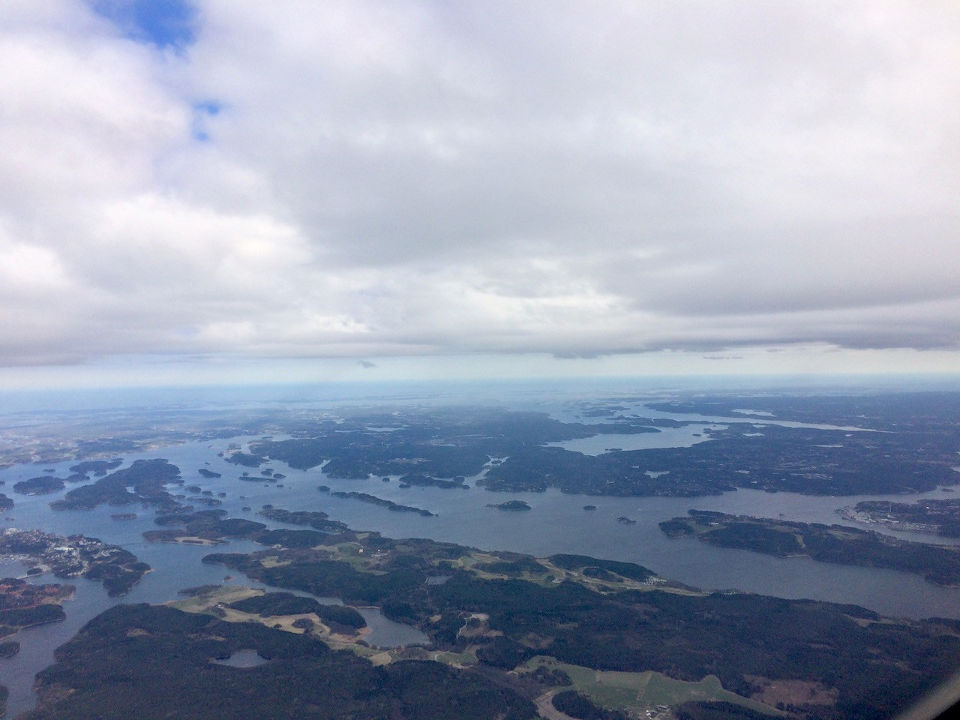
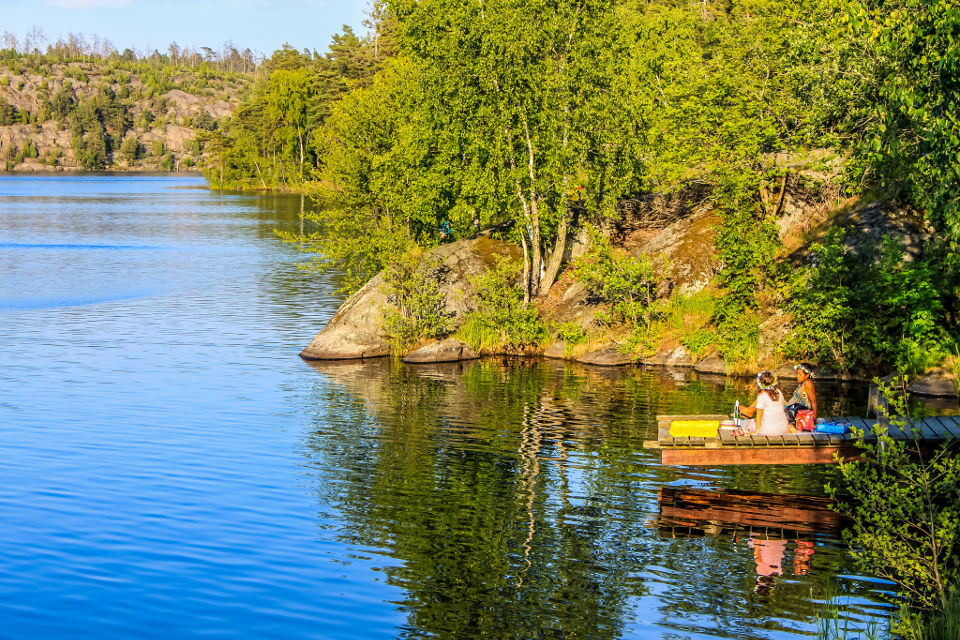
As the birds of steel approach the city from the Baltic Sea, the lucky travelers are treated to one of the most beautiful panoramas this planet has on offer. Thousands of little green islands scatter away from the Scandinavian mainland, emerald shards sinking into blue depths. Stockholm itself is not much different from the archipelago leading up to it, except that there’s more green than blue that surrounds this well-planned, clean and cozy capital.
This picture of the Stockholm Archipelago was taken by another traveler. I saw it in better conditions (clear sky, low sun, golden light).
I was one of those lucky travelers when my plane approached the Arlanda airport some years ago during a clear-skied summer evening. I still remember the feeling of grandeur that crept up my spine as the landscape below was tempting the adventurer in me. Join me on a tour of the city (and surroundings) that I’ve felt as a “home” even before I knew it actually will become my home (I’ve been here for almost 9 years now).
Arlanda Terminal 5, copyright Philip.
I arrived at the airport at around 20:00 and was picked up by Andrei, the man I’ll always be grateful to for giving me the opportunity to be here. The sun was still hours from setting since this was mid-July, close to the summer solstice. To give you an idea what this means, on the date when I arrived, the sun rose at 03:55 and set at 21:50, with a total day length of 17 hours and 54 minutes.
I’m thankful for whoever chose dark amber as the predominant color for the area of Arlanda’s Terminal 5 where I exited the airplane. It resonated with the golden light of the late sun, creating a warm, cozy atmosphere as I was walking fast past deserted gates.
Sankt Eriksplan, from the window of my first accommodation in Sweden.
The image above represents Stockholm very well. It’s a clean city with ample of green spaces, populated by well-maintained buildings with warm-colored facades. There are several large parks in the center of the city. Vasaparken is one of them and is situated right here at Sankt Eriksplan.
Not a lot of traffic during the summer.
A lot of Swedes leave the cities during the summer, so it’s easy to take pictures with seemingly deserted streets. The traffic infrastructure of the city has been built with plenty of wiggle-room in mind, even though in the past years it has begun to struggle. However, an amazing public transport system (among the best in the world) is saving most people from wasting time being stuck in traffic. Here’s the route planner^ (complete with price listings). Rechargeable travel cards can be purchased at SL centers in main transport hubs or, even easier, at any Pressbyran^ shop. And here’s a map of the metro^.
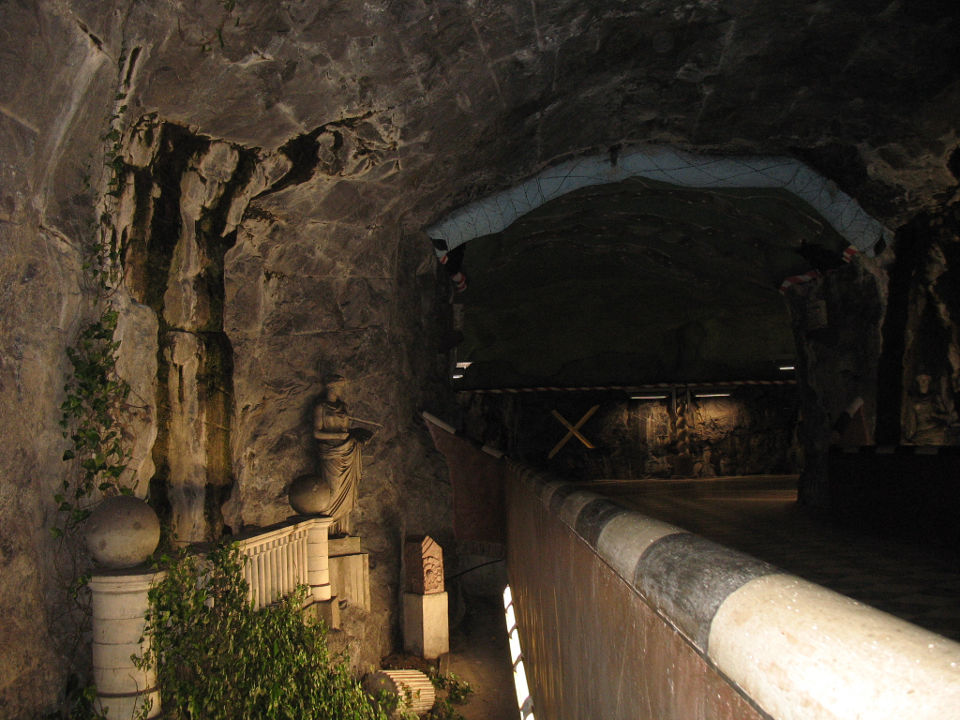
One of the tunnels leading down into the new commuter train station opened in 2017. Get yourself 20 minutes and explore this marvel of engineering.
But let us leave the city for a while. One of the best things a traveler can do in the Stockholm area is to get a boat ride through the gorgeous archipelago. My personal favorite is a trip to Sandhamn using a special kind of boat that takes the scenic route through parts of the archipelago where larger boats can’t fit. This is a day trip that is usually available from May to September. Make sure you don’t confuse this with the “usual” trip to Sandhamn, which makes use of faster boats, but goes via another route.
The Swedes sure know how to build in harmony with nature.
The trip towards the archipelago showcases some of the most beautiful houses I’ve ever seen. I have a lot of appreciation for the effort that was put into integrating human dwellings with the natural habitat. Of course, there are even better ways to do it, but this is a step in the right direction. It’s an example of architecture that is respectful towards the environment. But let’s not get into how much a house like that costs.
The Strömma Canal bridge as it lifted to allow our boat’s passage.
Towards Sandhamn, the vessel goes through the Strömma Canal^ which is very, very narrow. The guide will probably tell you about the devastation^ that a Russian fleet brought to the east coast of Sweden almost 300 years ago. The Russians suffered a humiliating defeat and were stopped somewhere around these parts.
Beautiful scenery on the way to Sandhamn.
Eventually, human civilization falls behind and nature reigns. Boats usually make brief stops on some of the permanently inhabited islands, sometimes only to drop newspapers or mail. There’s not a lot of sand on these rocky formations so beaches are in short supply, but Sandhamn is called like that for a reason.
Vaxholm, the “capital” of the Inner Stockholm Archipelago.
Another good place to visit is the island and fortress of Vaxholm^. The city of Vaxholm is reachable by bus thanks to a network of bridges. There’s a cheap ferry that makes the connection with the stocky fortress. The island of Grinda^ is another good destination, especially for those that focus on nature rather than architecture.
People with torches in Gamla Stan (the Old Town).
And now let’s get back to Stockholm. This is not a picture of a riot, even though there have been some of those^ as well (definitely not something usual, but there are dark moments in every city’s history, especially when it comes to capitals).
The Valborg bonfire.
This is how Swedes celebrate Walpurgis^: with a huge bonfire (among other things). We’ve attended this one in 2010, during our first full year here in Stockholm.
The “world’s longest art gallery”.
The Stockholm metro has been called “the world’s longest art gallery”. Indeed, there’s a lot of impressive, funny and perhaps even weird^ things to see when exploring the city via its more than 100 metro stations.
The station at Kungsträdgården is one of the most impressive.
I couldn’t find a better picture of the Kungsträdgården station, but it doesn’t matter. There are several online articles^ that feature good selections^ of Stockholm metro art^.
Awwww… isn’t that cute? Hi Frida! Hi Carl Philip!
One of the first things I noticed when I traveled with the metro here is that these guys actually went through the trouble of naming every single train car (each train has up to 3 long cars). How could I not fall in love with such a city?
Here’s more metro art.
The trains are quite long and very well maintained. There’s also an impressive network of buses that reaches almost any place you might want to go throughout the Stockholm metropolitan area. They are also extremely punctual, except when it snows a bit too much^.
Random fact time: tap water here is among the purest in the world.
In the market for a guitar?
Art, and especially music, is blossoming in Stockholm. A newly renovated^ music high-school ensures that future generations have ample opportunities to develop their skills. Creatives are pouring into and swarming around the city. The fact that the capital has become a regional technology hub contributes to the artistic growth.
Hellasgården. Not to be spelled “hell as garden”.
All around Stockholm, parks and nature reserves abound. One of our favorites is Hellasgården, south of the city, easily reachable by bus (15 minutes) from centrally located public transport hub, Slussen. Follow the marked path to circle the Källtorp lake. It takes about 1.5 hours. Beautiful views are waiting for you to behold.
Oh, hello there.
There’s a small touristic village here, featuring a restaurant, several cottages and a sauna. Sporting events are organized all year-round. In the winter, they make a skating rink and one can circle the lake while steaming, naked people run out of the sauna and throw themselves into the ice-cold water at a specially maintained area next to the shore.
The Flaten lake and nature reserve.
Also one bus away from central Stockholm is Flaten, a lake that supposedly has the best water quality around the capital. The accompanying nature reserve is swarming with people gathering mushrooms during certain autumn weekends. There are two small sand beaches that are quite busy during the summer.
Raising of the Maypole during Midsummer day at the Tyresta national park.
Midsummer day is very important for Swedes. Close to Stockholm lies the Tyresta national park and castle. We’ve been lucky to celebrate Midsummer there in 2010.
Midsummer day at Hellasgården.
Do keep in mind that what you’re seeing above is just 15 minutes away from a bustling capital (in Scandinavian terms). There’s no traffic, no hubbub, just forest, rocks, water and positive vibes. Oh, and clean air, just like in the rest of Scandinavia as a matter of fact.
Autumn at Hellasgården.
But wait a minute, isn’t this city supposed to be “somewhere in the North”? Where are the polar bears roaming on the streets, picking off half-frozen people from bus stations? Don’t worry, I haven’t been avoiding the subject of winter.
Winter, NOT as advertised.
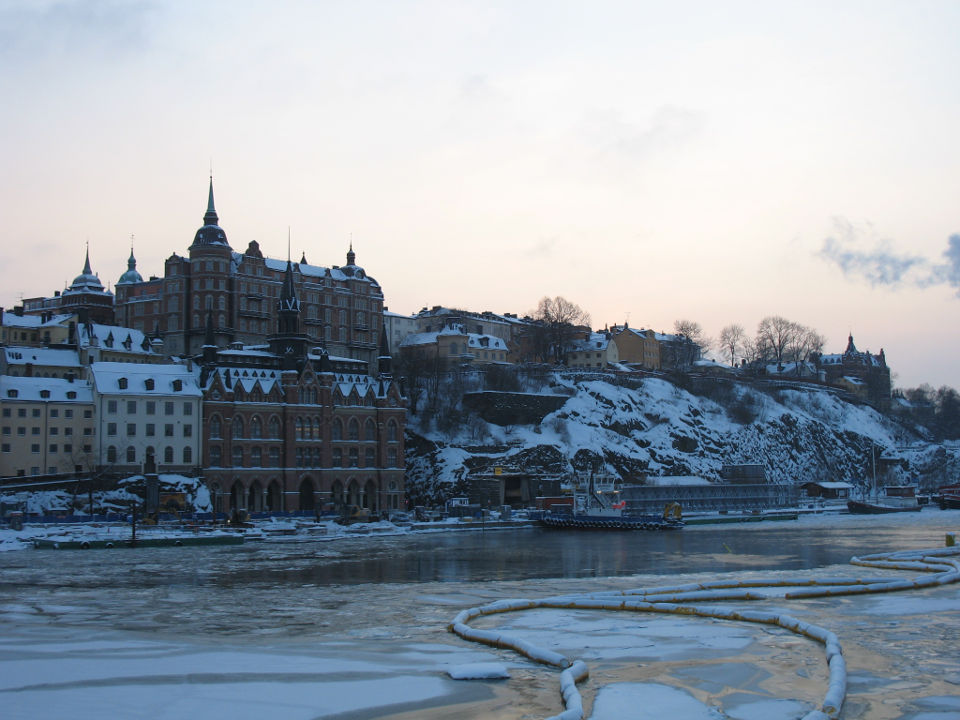
Thanks to its proximity to the Baltic Sea and to global warming, Stockholm winters aren’t that tough, at least not for me. My home town in Transylvania experiences more snow and colder winters, albeit not as dark and not as long. Yes, it gets quite dark, with the day length dropping to just over 6 hours during the winter solstice.
But when it snows…
Sure, there are times when we get buried a bit^, but remember that thing I said about an awesome public transport system? Because so many people rely on it, the Swedes won’t let themselves be buried for too long.
… it’s like in the fairy tales.
Personally, I love winters here. It’s the coziest time of the year. Almost everybody puts something shining and colorful in the window. It’s a time for snuggling in bed with a warm cup of tea and enjoying a good movie, or for doing some quality gaming in the dark. There are lots of indoor swimming pools, climbing arenas and many other places one can burn calories and time.
Stockholm in the winter.
Cold weather? As the (sometimes annoying) saying goes: “There’s no such thing as bad weather, only bad clothing”. Those that visit during the winter should definitely pack underpants and thick jackets. In Stockholm it’s not the temperature that gets you, it’s the humid wind courtesy of the Baltic Sea. The thermometer rarely goes under -15 Celsius and usually hovers around -10 to -5, sometimes even around 0.
Spring explosion.
Spring hits sometime around mid-April, give or take half a month. Yeah, that’s a long winter, although there are several warm days scattered through November and March. When spring does arrive, it’s an explosion of happiness. Stockholmers pour out and bask in the sun on every bench around town, occupy every sidewalk and find every excuse to be out in the light.
Celebrating spring over at Kungsträdgården.
Thanks to all the green spaces, it’s a city where one can truly celebrate spring. We try to walk underneath the blossoming Japanese cherry trees at Kungsträdgården every year. At this same location, during winter, they set up a skating rink. Kungsträdgården hosts various gatherings year-round (concerts, exhibitions, commercial and political events).
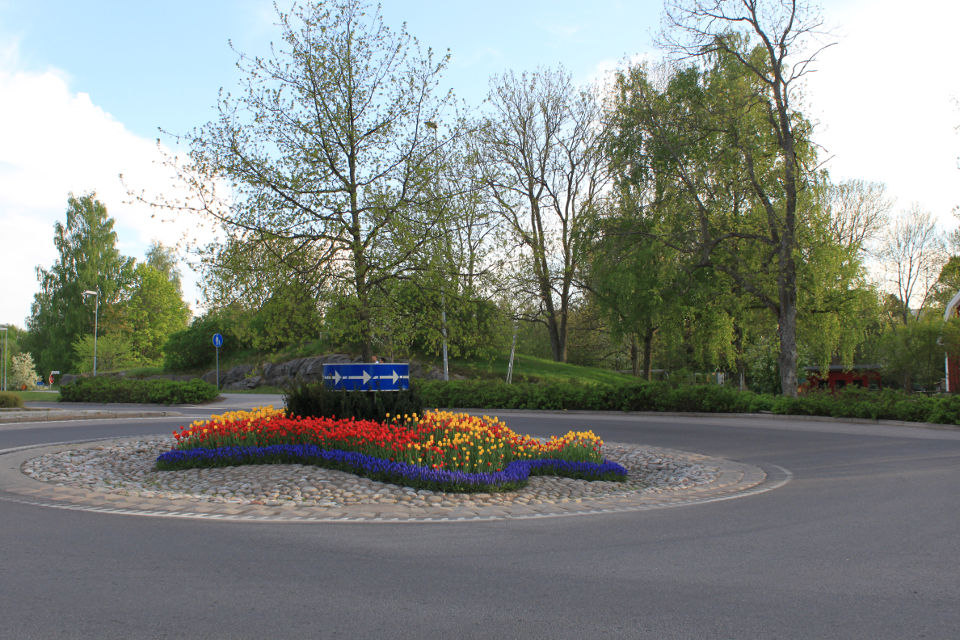
A very usual roundabout somewhere in a Stockholm suburb where this writer might live.
Here are some other fun things one can do in Stockholm: get a subscription for the city bikes^. It’s cheap and there are lots of pick-up & drop-off points. Go visit the Drottningholm palace or the Haga park. Enjoy the awesome view and in the same time have a tasty dinner up in the Kaknästornet television tower^. And I can’t forget my favorite museum: Fotografiska^, located at walking distance from Slussen. And since you’re in the area, don’t miss the chance to eat at one of the best vegetarian restaurants in the Swedish capital: Herman’s^.
The changing of the guards at the Royal Palace.
In Gamla Stan (the Old Town) one can find such points of interest as the Nobel Museum (overrated in my opinion) and the Royal Palace (not terribly impressive either). And of course, there are several streets filled to the brim with overpriced cafes and souvenir shops. There are two restaurants I can recommend in the area: the vegetarian Hermitage and the absolutely fabulous Viking-themed Aifur^.
Every day around noon (depending on weekday and season) one can enjoy the changing of the guards with military fanfare. The Royal Palace is only used by the royal family during official events. They normally reside at Drottningholm. Oh, speaking of royalty…
The closest we ever got to royalty.
This is a picture of King Carl XVI Gustaf and Queen Silvia that we took during the Swedish National day in 2010. They crossed barely five meters from where we were standing.
Royal guards.
Go on a promenade along the famous Strandvägen and don’t be surprised if you see people riding horses (not necessarily the royal guards). As you walk on Strandvägen coming from the center of Stockholm, you will find Djurgårdsbron, the bridge over to Djurgården, which is the island hosting some of Stockholm’s most important attractions.
Blurry Vasa (I had a smudge on my lens and it ruined about half a day worth of pictures).
The Vasa Museum^ is one of the most visited museums in Scandinavia for good reason. It’s built around a huge warship that sunk in what was a shameful failure for the Swedish naval forces. However, fast forward 400 years and the Swedes have turned it around into one of the best museums I’ve been in (and which probably more than paid for the loss of the ship, the expenses to recuperate it and some jokes about the Swedish navy). Well planned and organized, the Vasa is a must-see if you’re into going to museums.
The Nordic Museum. The Vasa Museum is visible behind it. Picture taken from Wikipedia, Creative Commons license.
And while you’re at it, make sure you at least go into the Nordic Museum for a couple of minutes. It’s situated right next to the Vasa. It’s a very impressive structure. The museum itself is excellent if you’re interested in the history of Scandinavia all the way from ancient times.
Make sure you ride the Free Fall Tilt (without your shoes on! You’ll understand why when you see it). Picture taken from Wikipedia, Creative Commons license.
On Djurgården you can also find the Gröna Lund^ amusement park, open spring-autumn. On most late afternoons they also host a concert, sometimes featuring pretty famous names. A beautiful park surrounds Prince Eugene’s Waldemarsudde^, an art museum. Right across from Djurgården you can find the Sea History Museum^, the Technical Museum^ and the Ethnographic Museum^. With this many attractions and so much nature all around, the Djurgården area offers plenty of opportunity for charming walks.
Stepping back in time at Skansen.
Also on Djurgården you can find the Skansen open-air Museum^. It’s a recreation of a long-gone Sweden. Year-round, the employees of the museum illustrate life as it was a long time ago. They walk around and go about their business in the exact same clothes people here were wearing hundreds of years ago. Enter one of the many cottages and see them work iron, glass and furs, or listen to them play the violin and sing folk songs during the winter, sitting by the fireplace. There are many events for family and children at Skansen.
Water mill.
They either re-created or brought entire structures from all over Sweden. The museum covers a large area so you can consider it a day trip. There’s also a zoo featuring animals from Sweden. Some of them are kept in decent conditions while others have very little living space, something that really doesn’t sit well with me.
Old dwelling at Skansen, featuring the Nordic Museum far in the background.
There is an even worse zoo at the bottom of the park where they caged exotic animals. It is at that zoo where a couple of years ago it struck me more intensely than ever just how terrible these places are. Inside one of the “large” enclosures I saw two monkeys perched next to one of the few windows of the enclosure, looking outside towards a freedom they will probably never experience.
The place is contradictory to the Swedes’ general respect towards animals and the environment. But having a zoo is still considered around the world as providing some sort of “educational value”, despite the fact that it also presents children with a skewed image of reality – that of animals seen as some sort of play-things or curiosities for us to catalogue. I feel that this is more harmful than whatever is gained by seeing an animal up-close rather than in a documentary. And that’s it for today’s ethics lesson :).
The cloudy ballet.
Millesgården^ is another good museum with plenty of open-air art. It is situated on the island of Lidingö, easily accessible with public transport. It’s mostly focused on sculptures, some of them appearing to defy the laws of nature (but it’s all just physics).
Reaching for the sky at Millesgården.
Stockholm is a safe city given its size and cultural diversity. With that in mind, yes, there are a couple of neighborhoods that I would recommend staying clear of: Tensta, Rinkeby and Husby. But there really isn’t any major risk if you mind your own business. Nothing on the scale of what you can get yourself into in (much) bigger cities such as Paris, London, Rio or New York.
Enjoying a day out at sea.
Last I heard, about one in every seven Stockholmers own a boat. I think a better statistic is that seven out of ten people speak English here. Half of them speak it very well.
Stockholm peoples (a paraphrasing of Alan Watts’ expression that “just like the apple tree apples, the Earth peoples”). Those are my wife and son in that picture.
I am happy to say that I consider myself lucky to have been shaped by this city. No matter what my future holds, I am fortunate to have lived here for almost 9 years and counting. I arrived here as a stressed-out Romanian immigrant. This city and its inhabitants worked miracles on me. Together with my new-found home I also had the courage to start a family, something that Sweden is wonderful for (but more on that in a future article).
Stockholm is also quite contradictory at times. It is a place that offers many temptations and a lot of Swedes have fallen prey to the hyper-consumerism push^ coming from the United States, a country they seem to look up to for reasons I can’t really comprehend. And yet, it is a place that encourages personal evolution and reinvention. Like anything in life, it is what you make it. For me, Stockholm is the place I was born again.
[ax_meta fbimgurl=’http://mentatul.com/wp-content/uploads/2018/02/02626-StockholmNorthernBlueEmerald-Share.jpg’ lnimgurl=’http://mentatul.com/wp-content/uploads/2018/02/02626-StockholmNorthernBlueEmerald-Thumb.jpg’ fbimgw=’1170′ fbimgh=’350′ lnimgw=’250′ lnimgh=’250′ title=’Stockholm – North's Blue Emerald’ desc=’Here are the best things to see and do in this clean and modern city surrounded by nature reserves and sea.’]
Thanks to climate-change skeptics, we’ve been fortunate to have a lot of talented, driven people doing great research that proves just how real and dangerous climate change really is. Unfortunately, even with the best of intentions, the media has turned the frequent updates from the scientific community into a deluge of climate change news, which led to the audience developing a sort of selective hearing when it comes to this topic. “Yeah, yeah, we’ve heard it all before”. However, here on Mentatul I need to address dozens of topics while keeping at roughly one post per week. This forces me to be very selective about what I post. So yes, this one is important.
Two articles are the reason for this post. The first one is about farts. Cow farts to be precise. The methane that they contain, to be even more precise, and how it affects global warming:
And then I read this other article^ that lead me to another, even better article, which provides a rather appalling prognosis for our future. And it’s not even “the worst case scenario”. I’m sorry to say, but given all the statistics I’ve seen recently, it seems to be that the following article is presenting a future that has a high probability of becoming reality. And I see very few governments do anything about it, especially when it comes to the world’s biggest polluters.
I am tempted to say that you shouldn’t read this if you’re currently feeling good with your life, because this piece is a real downer. But it is also one of the most relevant and well-written articles on climate change that I’ve come across in the past couple of years. This is an alarm bell made of pure gold:
I consider myself lucky to still have running water, electricity and generally healthy food available. In the same time, I feel it is almost disrespectful towards my child to enjoy all this without doing something about the immediate (speaking on a generational level) danger we’re in. I plan to do whatever I can to raise awareness about this topic. It’s never too late.
[ax_meta lnimgurl=’http://mentatul.com/wp-content/uploads/2018/01/02618-LatestGreatestClimateChange-Thumb.jpg’ lnimgw=’250′ lnimgh=’250′ title=’The Latest (and Greatest) on Climate Change’ desc=’Thanks to climate-change skeptics, we've been fortunate to have a lot of talented, driven people doing great research that proves how real and dangerous global warming really is.’]
It is said that “all that is necessary for the triumph of evil is that good men do nothing”. Well here’s one guy that did something about the mind poison that is racism (the illusion of separation, taken to the extreme). Some months ago, in the midst of racial tensions at the Air Force Academy, general Jay Silveria delivered a convincing and moving speech against racism:
I am extremely happy when I see that certain people in positions of power take a stand against infectious, debilitating ideologies. As a matter of fact, I’m so happy that I’m going to (almost) ignore the fact that this speech comes from a person that presides over an institution that trains people into the art of killing other people (which is sometimes erroneously called “defending the values we believe in”).
But who knows, maybe the good general will one day hold a lecture against the very concept of war. Judging from this speech only, this is an honorable man that is doing the best he can given the circumstances, which is really all that can be asked from soldiers!
Here’s the YouTube version, in case the other link expires:
[ax_meta lnimgurl=’http://mentatul.com/wp-content/uploads/2018/01/02612-ImpressiveSpeechRacismJaySilveria-Thumb.jpg’ lnimgw=’250′ lnimgh=’250′ title=’Impressive Speech against Racism Delivered by American Air Force General’ desc=’Some months ago, in the midst of racial tensions at the Air Force Academy, general Jay Silveria delivered a convincing and moving speech against racism.’]
Once upon a time, governments were major stakeholders in most large-scale technological and scientific ventures. Such projects were either built directly by the government, or by companies in which the people had a lot of say. But all that is far behind us. Now-a-days, government isn’t exactly “the people” anymore. And now, it’s corporations who build the telecommunication infrastructure for tomorrow:
I find it rather sad that as I’m typing this, I am pondering which is worse: having my digital life in the hands of corporations that will exploit it however they see fit, or (/and?) allowing governments to keep encroaching on our privacy and freedom? It’s becoming harder to distinguish between the two, especially as corporations have proven time and again that they can easily buy government.
It’s enough to look at how the political freak-show in the USA (not even a full year into its tragic, 4-years lifespan), is already spreading its tentacles across our civilization like a plagued octopus. The monstrosity is currently busy destroying what was left of “the land of the free”. Here’s how the American FCC (Federal Communications Commission) plans to eliminate the Net Neutrality^ laws that the Obama administration painstakingly managed to get through:
They call it “Restoring Internet Freedom”, and as the article above points out, the name is laughable. But then again, given the state of education worldwide (which leads to generalized compliance), governments can go on with passing draconian laws using these disgusting euphemisms.
Here are some even better law names that I’m putting forward so that governments can use in the coming decades:
“Labor Market Liberation” – a law to eliminate those pesky minimum wages.
“Nutritional Defense Initiative” – outlaws all ecological products, so that there can be no competition to industrialized, dangerous food.
“Empowering Citizen Security” – a law that allows citizens to spy on each other for as long as they report to a central authority. I bet they’re going to call that central authority the Situational Technical Assistance for Solidarity Initiative (STASI).
I can come up with more, but I think I made my point.
[ax_meta lnimgurl=’http://mentatul.com/wp-content/uploads/2018/01/02607-HowCorporationsOwnInternet-Thumb.jpg’ lnimgw=’250′ lnimgh=’250′ title=’How Corporations Get to Own the Internet’ desc=’Once upon a time, governments were major stakeholders in most large-scale technological and scientific ventures.’]
Throughout the past years there have been several high-profile occasions when apps were in the news for questionable tracking strategies. Even applications that do not use novel means of compromising our privacy are gobbling up increasing amounts of data while their creators cash in on the profits obtained from selling the user’s digital life^ to the highest bidder. At the receiving end of this deluge of spyware are we, the people.
Even for those of us that do read the list of permissions an app requests upon installation, it is hard to avoid installing certain apps because they come with other features that we need. It’s an old trick that is akin to the Trojan horse. This is how these dubious app creators get in our back yard: by offering something that is 90% useful and 10% spyware, but which must be accepted as a whole.
Devious solutions for the same old need
Smartphone espionage has gotten very clever as of late. Check these two^stories^ about ultrasonic tracking. According to one research, hundreds of Android apps with an install base in the millions include a library that is used for this purpose. The way this works is by listening to ultrasonic audio “beacons” implanted in advertisements. Humans can’t normally hear sound in this range, but smartphones’ microphones can.
When a user has one such application running and an advertisement that includes an ultrasonic marker plays on TV or anywhere around the user (for example radio or an ultrasound-emitting advertisement panel in a shopping mall), the app can make an association between the user and the played content. This can be used for simple tasks such as sending a unique ID back to a service which then sends a shop’s deals to a user, but it can just as well include a lot of other information about the device and its owner.
Some of the things this system can achieve are rather worrying. For example, it can be used for determining a user’s (approximate) location even if the GPS is turned off or out of range. This can be done by having a particular advertisement panel emit a unique ultrasound beacon. This can later be used to determine when the user is in its proximity. The system can also be used to track a user’s TV-watching habits without consent. Some of these uses are legitimate though, like pushing advertisement and coupons to somebody that has given their consent for using this “feature”. A few such apps disclose the tracking prominently. But this is usually not the case.
More recently, the Uber app was found to be capable to record portions of the iPhone screen^. The company defended itself saying that this was done in order to send images with maps to the iWatch (using the iPhone to render the map because the iWatch lacked the required performance). There’s a gazillion ways this can go wrong not if but when hackers manage to leverage this capability in order to steal passwords and other sensitive information. The feature was reportedly removed but it still shows exactly what the smartphone really is. And there’s no way to sugar coat this…
The smartphone is a surveillance device
Economically, it is used by corporations to mine data^ out of people and use it to manipulate them into buying products. The smartphone grew into a fascinating tool for mass surveillance because it comes with a bunch of features that users really want. I mean, it’s really nice to have a browser and a video camera available at all times, right? Except that all these “free” apps are just a gateway for companies that are tracking users ever since advertisers figured how to use our digital lives against us and our vulnerable minds.
Currently, the goal most of these companies have is to get us online for as much time as possible. As for the camera and the other (many) sensors inside a phone, we might end up not being the only ones controlling them. There are innumerable cases of this technology being used with criminal intent. There’s only need for one backdoor to take control of our devices and that backdoor’s existence is ensured by the producers of these devices.
Governments will of course not oppose this (they’ll even encourage it^) because the greatest concern of a government is to maintain its appearance as a legitimate organization. Investigative journalists^ and whistle-blowers^ have greatly damaged governments^ and corporations as of late. By increasing surveillance capabilities under various pretexts, governments and corporations hope to prevent the next public relations scandal. I’m not even blaming them; they’re just trying to survive^. But people who realize they’ve been sold behind closed doors won’t remain the loyal followers that these entities need in order to justify their existence.
To make things easier for themselves, governments will make sure they also have access^ to whatever technologies are deployed on these devices. One problem, however, is that the citizens of one country may use devices produced in another country. What is the percentage of electronics we manufacture in Asia? And then there’s this thing about hardware backdoors^.
Innocent bystanders
A few days ago I was waiting in line for an old lady that wanted to change the battery of her phone. It was a keypad phone of the kind considered modern 15 years ago. The image of her sitting there in front of the cashier will stay with me for a long time because, in an instant, my mind ran through the entire planned obsolescence racket^ and understood the inevitable verdict that will be given by the system this woman fell prey to.
In the past years I’ve become increasingly aware of the hideousness of hyper-consumerism^. But this situation has put a face on it. Of course, the shop couldn’t help her. The only option for the old lady was to switch to some other phone, most probably with a non-replaceable battery, so she can be forced to change it every few years. Not to mention she must adapt to new software every time it happens and probably be at the receiving end of automatic updates that will change features in her phone, which is exactly what an old lady wants from her device (not!).
With corporations making money from data and with governments drooling over the private lives of its citizens, it’s no wonder that phones with replaceable batteries have disappeared off the market (using “water resistance” as a cheap excuse). Yes, there is a likely connection between forcing people to upgrade their phones and the need to make sure that those people voluntarily carry around the latest and greatest in spying technology in their pocket. Hey, some people will even queue for days and pay outrageous amounts for these things.
Reasons & solutions
But why is it like this? The answer is terrible in its cruel simplicity. These are the rules of the Human Game^ at this point in time. What’s terrible is that even though we are directly responsible for creating and tolerating these rules, we also face an extremely powerful opposition to change them. The machine has grown into a huge, lumbering beast whose behavior harks back to our most ancient instincts, such as the imperious need to survive. Corporations need to earn money. They exist for this purpose and this purposealone. So it is no wonder they buy governments and do whatever it takes in order to survive in the jungle of a (stock) market^ that is the very heart of the machine.
Can this all change? Of course it can. And the solution is wonderful in its beautiful simplicity. We just need to change the criteria with which we purchase goods and services and with which we vote. It’s as simple as that. We need to change the rules of the Human Game. Stock market processes can be changed to encourage responsible and long-term investment. Governments can be encouraged to invest into research and education. Corporations will have no alternative but to transform themselves into entities that value the environment and respect their customers. Because otherwise, nobody will purchase what they’re peddling. There’s only need for one commercial entity in every field to prove that this works. This will generate a mass extinction of the old business model. And it’s us, the consumers, who can trigger and sustain this.
The very reason I write these words is because I strongly believe in this change. And what’s beautiful is that the change doesn’t even need to be sudden (and therefore potentially violent). Actually, it can’t be sudden because this modification in people’s mentality will not occur overnight. It will take time until more of us are ready to champion this cause and for it to spread. But it will happen. Of that, I am sure. I just wish that it will happen before another disaster strikes our civilization.
A lovely (even if sad) wordplay
In closing, here are a few other factoids from the war against privacy (I noticed that ZDNet has a pretty good section about all this):
[ax_meta fbimgurl=’http://mentatul.com/wp-content/uploads/2018/01/02596-NotSurprisingSmartphonePrivacy-Share.jpg’ lnimgurl=’http://mentatul.com/wp-content/uploads/2018/01/02596-NotSurprisingSmartphonePrivacy-Thumb.jpg’ fbimgw=’1170′ fbimgh=’350′ lnimgw=’250′ lnimgh=’250′ title=’Why It's Not Surprising That Smartphone Privacy Is Going from Bad to Worse’ desc=’Throughout the past years there have been several high-profile occasions when apps were in the news for questionable tracking strategies.’]
Whenever news comes in about some sort of data breach or hacked service, we’re often treated with pictures of the assumed perpetrators and how their office (bedroom? garage?) looks. Mentatul managed to get in touch with some of these unique people. They were happy that somebody is interested in their private lives and difficult working conditions.
Let us begin with Paul, a young man from Edinburgh who started hacking banks when he was 15 years old.
Paul
We asked Paul about why he decided to become a hacker and about his daily routine:
“I knew I am destined to be a hacker when I realized that simply by looking at a computer screen I could see zeros and ones fly out of it, along with words such as “password”, “identity theft” and “data security”. I then turned to the Hacker Fraternity and they told me only precious few have this talent, which they call The Gift. They told me I’m a natural.”
“But even with such talent, my job is very difficult. I always have to dress in a menacing yet stylish outfit. Wearing gloves makes typing difficult. The sunglasses force me to crank the screen brightness for my laptop all the way to the max. It seriously impacts battery life.”
Another interesting story is that of m4~, a housewife from Kansas who started hacking out of boredom.
m4~
“Watching cats and dogs videos on Facebook gets old after a while, so I took a course in hacking. Suddenly, whenever I was looking at computer screens, a blue mist enveloped me, and I could see passwords fly through it. After winning a recipe website hacking contest, the Hacker Fraternity awarded me with this special hoodie that makes me disappear when I’m hacking. The dramatic effect is important for online success. The only problem is that my son got scared a couple of times when he saw mommy disappear in a dark blue haze when she turned on her laptop.”
And then there’s Ulf, the boy-wonder from Switzerland who makes a living by stealing Bitcoins from rich.
Ulf
“One day I found this special magnet that attracts Bitcoin straight from the wireless networks of the rich. During the usual two-hour ride in my black van throughout the priciest neighborhoods in central Switzerland, I make about $4000.”
Through our correspondent in New Zealand we got to know The Grewsome Crew, two siblings from Auckland. We asked them to tell us if they know of any good hackers that are able to do their job without this natural gift of seeing ones, zeros and cryptic symbols when they touch a keyboard.
The Grewsome Crew
“Not really, no. Only those with The Gift can make it out there,” said the brother using a vocal distortion filter. His sister filled in: “It’s very tough competition. Sometimes the only thing that makes the difference is the hoodie. It also helps if you have a map of the Earth in your secret bunker. It’s good for geotagging victims.”
Then there are those that, in addition to The Gift, have additional Gifts, such as p00r 0wn3r. He called us through a network of crypted relays and refused to give his location but judging by his English accent, we can safely assume he’s from a French-speaking area of the world.
p00r own3r
“You see, I was born with a severe eyesight handicap, so I learned Braille. Soon after finishing gymnasium I realized that I can come up with the correct password simply by touching text boxes on the screen. It’s called “tactic decryption” and there are very few of us that have this gift.”
Concluding our series of interviews, we discussed with one of the unfortunate hackers who do not have The Gift. Meet Ovidiu from Moldavia.
Ovidiu
“Not having The Gift complicates my life. I must always use fancy lights and a fog machine to be even able to bypass the simplest security measures. If I wear an expensive suit in combination with a thick balaclava I can look threatening enough to manage some simple weekend heists. I’ve been kinda depressed due to all this.”
Mentatul, be careful what you’re writing. This is your first warning from S3Kr3T. I uploaded a picture of me to warn you that I can own this website whenever I want.
That’s all folks, a glimpse into the unique lives of those that force you to change passwords every now and then, and sometimes even manage to siphon money from your bank accounts.
If you want to see more pictures with hackers, just follow this simple Google search:
[ax_meta lnimgurl=’http://mentatul.com/wp-content/uploads/2018/01/02583-HackersAllAroundUs-Thumb.jpg’ lnimgw=’250′ lnimgh=’250′ title=’Hackers all around Us!’ desc=’Mentatul managed to get in touch with some of these unique people.’]
Because being informed is just not enough anymore…