Why Do We Make Children Sleep Alone?

As “the Internet likes to say”: this!

http://www.latimes.com/opinion/op-ed/la-oe-reiss-sleep-alone-20170324-story.html^

I’ve been meaning to write something about what I think regarding having children sleep in their own rooms. Fortunately I found this excellent article first. It says everything I would have said, and then some. It’s well researched and will hopefully give parents and parents-to-be some good food for thought. Key concepts: emotional stability, effective sleep, nurtured development.

To be clear: I have nothing against parents’ wishes for a good quality rest and need for intimacy. But co-sleeping is not necessarily mutually exclusive with quality of life for adults (as many, including myself, can confirm). Of course, co-sleeping doesn’t always work and in that case, it’s equally important for mom & dad to do what they can to be happy parents because parents who sacrifice too much become even more dangerous for their offspring than parents who isolate their kids in another room.

Just as I was looking for a thumbnail for this article, I stumbled upon this horrible news^. Some parents actually found it suitable to administer hormones (melatonin) to their children to “help” them sleep. Parents do this without there being any long term study on the effects of messing with the neurotransmitters of these young children. Talk about complete ignorance in the age of consumerism. This happens when “religion saves” turns into “the drug store saves” (check my Consumerism as Religion^ article).

[ax_meta lnimgurl=’http://mentatul.com/wp-content/uploads/2017/07/02020-WhyDoWeMakeChildrenSleepAlone-Thumb.jpg’ lnimgw=’250′ lnimgh=’250′ title=’Why Do We Make Children Sleep Alone?’ desc=’An excellent article about co-sleeping and the Western craze of sending children to sleep in their own rooms starting with extremely young and vulnerable ages.’]

The AI Stock Market Wars

Before Artificial Intelligence develops free will and would even be in a sufficiently advanced position to decide if humans are necessary on this planet, we seem to be doing a pretty good job of destroying ourselves anyway by giving a dangerous amount of power over to semi-intelligent algorithms. Enter the artificially intelligent hedge fund:

https://www.wired.com/2016/01/the-rise-of-the-artificially-intelligent-hedge-fund/^

But what’s this talk about “destroying ourselves”? Can these things actually kill? Well, let’s look at this way: these algorithms are designed to make profits for their owners by moving investments from one company to the other. In other words, stock market algorithms are playing with the fate of companies in order to make profits for investors. But unlike a human, an algorithm is not programmed for empathy, mercy or intuition. Such algorithms could potentially annihilate a promising company simply because it made some errors in reporting or short-term financial planning.

But this is just the first step. As the AI Stock Market War gears up, the operational and decisional complexity of automated trading will exceed anything humans are even remotely able to keep track of. Before you know it, you got a jungle of super-intelligent AIs desperate to ruin all the others.

Let me repeat: these things aren’t programmed for empathy or mercy (that’s why I’m using the word “things” – it’s something that humans made up and that possesses no free will and no naturally developed instincts). They will eliminate a company that doesn’t perform well with the same precision a doctor cuts out a tumor, except much, much colder and disinterested. And before you say: “well, that’s good isn’t it? Survival of the most profitable”, need I remind you that it’s you and your friends and family who work in these companies?

There might come a day when we won’t be able to plea for our jobs with another human being. Instead, we’ll negotiate with a computer that has just reached the decision that we’re useless to the company (and perhaps society) and our best home is on the street, begging for food (if we’re lucky).

And before you think that “nah, humans will never allow an AI to run their company”, well, think again:

http://www.businessinsider.com/hedge-fund-bridgewater-associates-building-ai-to-automate-work-2016-12?r=US&IR=T&IR=T^

I think Artificial Intelligence can develop into something really wonderful. I also think humans are born wonderful. Unfortunately, the current educational system and the society it created have the ability to create some very twisted individuals. And if such a twisted individual manages to get behind the control panel of a powerful AI, then woe upon the rest of us… because such AI makes nukes look like firecrackers (and I wouldn’t put it past a program to reach the conclusion that managing to somehow launch a cyber-attack or even a physical attack towards another company would be a profitable decision).

Update 2018-10-16: if this topic interests you, make sure you also read “The Danger with Artificial “Intelligence” Is That It’s Not (yet) Intelligent”^.

[ax_meta lnimgurl=’http://mentatul.com/wp-content/uploads/2017/07/02014-AIStockMarketWar-Thumb.jpg’ lnimgw=’250′ lnimgh=’250′ title=’The AI Stock Market Wars’ desc=’Stock market algorithms are playing with the fate of companies in order to make profits for investors.’]

A Dark Side of Software

Lying and cheating to get a competitive edge is nothing new and certainly not limited to human beings. But Earth has plenty of resources and there’s no serious threat to our existence in sight (other than ourselves, of course). Because companies affect so many beings, cheating has serious effects.

Thanks to software, never before has cheating had so many ways of staying hidden through complexity and obscurity. Thankfully, some people still have a conscience and this is how we found out about the way Uber, Volkswagen and probably many other companies have stayed above the law and ruined the lives of countless people:

https://medium.freecodecamp.com/dark-genius-how-programmers-at-uber-volkswagen-and-zenefits-helped-their-employers-break-the-law-b7a7939c6591#.k774sps2y^

As software engineer, to say that I’m disgusted by what these guys did would be an understatement. It is not unethical. It is outright criminal. What’s even worse is that such people^ usually manage to escape justice. Laws are changing too slowly to be able to keep up with these crooks and their perpetually changing methods. It’s like an old turtle chasing a cheetah. It’s not even funny anymore, it’s painfully sad.

[ax_meta lnimgurl=’http://mentatul.com/wp-content/uploads/2017/07/02009-ADarkSideOfSoftware-Thumb.jpg’ lnimgw=’250′ lnimgh=’250′ title=’A Dark Side of Software’ desc=’Thanks to software, never before has cheating had so many ways of staying hidden through complexity and obscurity.’]

The Importance of Empathy

This wonderful video explains in no uncertain terms why empathy is important, how empathy should work and examples of proper empathetic behavior:

http://lifehacker.com/the-importance-of-empathy-in-everyday-life-1791961488^

The video can also be found below:

https://www.facebook.com/lifehacker/videos/10154117508751356/?hc_ref=NEWSFEED^ or https://www.youtube.com/watch?v=UzPMMSKfKZQ^

Some people are empathy deficient while others have so much of it that it can become overwhelming under certain conditions. But empathy is a skill and like all skills it can be trained. Through practice, we can hone our empathy so that it aligns with our society’s natural tendency towards evolution and success through mutual support.

[ax_meta lnimgurl=’http://mentatul.com/wp-content/uploads/2017/07/02005-TheImportanceOfEmpathy-Thumb.jpg’ lnimgw=’250′ lnimgh=’250′ title=’The Importance of Empathy’ desc=’This wonderful video explains in no uncertain terms why empathy is important.’]

Be and Let Be

Blog Entry: Unlike most articles on Mentatul, this post details an entirely subjective perspective, hence, it is posted underneath the Blog^ category.


We’ve accumulated millennia of philosophy and principles, of dogmas and history. We’ve seen science clash with religion and gained an enormous amount of self-reflection through sometimes painful confrontation. We’ve been given commandments, laws, rules, methodologies and all manner of tools for self-improvement. And yet sometimes all is needed for peace is just four words.

After years of philosophizing and ethical debates, the beautiful simplicity of these simple words hit me out of the blue one day. Hundreds of hours spent “debating life” crystalized into what I consider to be an easy to remember (and perhaps harder to follow) principle.

These four simple words represent the very essence of peace. When this tolerant and empathic principle is applied, the result is a reduction in negative feelings and a strong movement towards friendship and understanding. My life became more positive since I started repeating these words in my head before getting upset on somebody, or when I realize I harbor any negative feelings towards somebody.

Instinct and free will

There will always be friction in society. This is a healthy, constructive process. But friction can also lead to excessive heat. Would it not be wonderful if, before it hurts, we can call upon a peaceful mantra? We can relish in the understanding that nobody is perfect so… just be and let be. It is this behavior that I strive to offer to those around me, and it is the same that I wish to receive.

Does this mean that we should allow people who do not live by this mantra just step over us? Of course not, because that would not be something we’d do instinctually. The verb “be” is very much related to instinct. To be means exactly that. It goes beyond thought and down to the very core of our being. Life will defend itself if threatened. That is precisely why we are alive.

But does this mean that we should live according to instinct only? Assuming we actually have free will (that’s a debate for another time), its gift is a certain freedom from instinct. To “be and let be” is a way to guide this freedom towards a peaceful and harmonious life. Humanity has made it this far because sometimes people have put their self aside and acted for the greater good. And assuming we don’t have free will (just self-awareness that makes us think we do), then this mantra of peace is even more meaningful. If we’re just creatures of instinct, then it’s important to understand that others are too. This realization will lead to a calmer life, without having to sacrifice our own well-being.

The One

Several schools of thought and traditions indicate that we all come from the same source. The current consensus in the science world is that this Universe has been born of a singularity of everything. Subsequently, the death of a star made our existence possible. Religions also speak of single sources of life and common destinations where life returns.

Given the repeated motif of common ancestry, it is easy to see ourselves as parts of the same whole. In other words: we are one. We may play our individual roles for now, but at a certain level, we are one. Let’s take another leap of faith: if we are all one, then you are me and I am you. And then, however I act towards you, I in fact act towards myself. If at one point, we will all be one again then I want to act towards you in a way that is respectful and loving. And so we should act towards ourselves, because love starts in our insides and because we need to always keep into consideration our needs as well.

The hall of mirrors

The paradox of existence lies in duality. Existence can be incredibly simple: just be. Yet, within life lies infinite complexity, forever unfolding for as long as we adventure inside the hall of mirrors. And that’s as it should be. Otherwise we’d be bored to death. But sometimes it’s good to go back to the core, to center ourselves and find peace.

Perhaps even the question of having free will is a paradox of duality. Is there any free will? Perhaps it’s a matter of our own free will to decide if we have free will or not. But maybe the discussion about free will should simply be left well enough alone. Just be and let be. Less philosophical struggle and more enjoying of what is.

Back to simplicity

“Be and just be” is a savior of time and energy. There are fewer rules required, there’s less thinking and less keeping track of personal score boards. It’s not surprising at all: being is simple. But it’s even simpler to let others be as well.

We are born with an endless supply of tolerance and love. What our society needs in order to progress to a whole new level is a style of education based on empathy and understanding. This should integrate and reinforce our natural-born constructive tendencies. The light-motif should be: try to see things from the other’s perspective and if things don’t make sense: dig deeper.

Especially in this fast-moving world where we scavenge every second and ounce of energy, being more efficient is a life savior. Help and ask for help, relish in the support society gives. Combine this with the ability to let negative feelings pass over and disappear back into nothingness. Even better, as we analyze negative feelings and the effect they had on us, we gain the ability to extract understanding from these feelings and turn this into a source of energy for progress.

I am grateful that you were here.

I love the minutes you’ve given me.

I will strive to be and let be.


This article is the third part of The “Art of Peace” Trilogy^.

[ax_meta fbimgurl=’http://mentatul.com/wp-content/uploads/2017/07/02068-BeAndLetBe-Share.jpg’ lnimgurl=’http://mentatul.com/wp-content/uploads/2017/07/02068-BeAndLetBe-Thumb.jpg’ fbimgw=’1170′ fbimgh=’350′ lnimgw=’250′ lnimgh=’250′ title=’Be and Let Be’ desc=’These four simple words represent the very essence of peace.’]

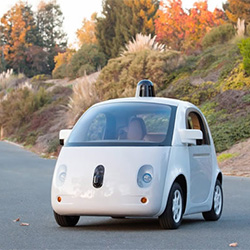
Robots on Our Streets (and Everywhere Else)

The development of self-driving vehicles is progressing at a steady pace. It’s only a matter of time before seeing a human drive a vehicle on public roads will be akin to seeing a horse and carriage on a motorway. Even if introduced globally right now while still in development, self-driving technology would drastically reduce fatalities.

Unfortunately, today’s society would only accept this technology if it is perfect. That’s because it is “understandable” that crazed primates may kill other beings because of recklessness and inattention, but it certainly won’t be tolerable for a computer to make a mistake, even if it would happen a thousand times less often – and most likely due to freak coincidences rather than the machine actually making a mistake. But society will evolve. Self-driving is here to stay and like it or not, primates will soon be relegated to driving on the race track or some other place where the potential of threatening life is lower.

And while self-driving is currently one of the most debated topics, we should really be talking about self-piloting, which is a more generic term. It covers more of what will actually happen: all machinery will soon be able to pilot itself. So how would worldwide fleet of interconnected self-piloting machinery change life on Earth?

The purpose of any post in the Futurology^ category is to launch a wild, boundless speculation regarding what the future holds regarding a certain concept. To get things going, here are some of the things I imagine can be accomplished in the near future (coming decades) by self-piloting vehicles. Feel free to submit your own ideas in the comments below. With your approval I may integrate these in the article, giving proper credit.

  • A Vehicle Management System will control all traffic. The system will have different behaviors based on vehicle type and region. For example, the VMS will have special policies for motorways. The motorway VMS will be responsible for managing inter-city travel. When a vehicle reaches a city, the VMS will switch to city-specific policies which have been set by the city’s authority. This allows for seamless vehicle control which adapts to any number of different regional rules (for example what side of the road a vehicle can drive on or at what altitude can a plane fly in a certain airspace).
  • Obviously, the VMS will have to be extremely well protected against security threats and will have to be thoroughly tested for many years. It should be decentralized, redundant and a server located no further than two network hops away, guaranteeing millisecond-precision. I believe that such a system should be open source, so that the community (especially engineers and scientists) can peer review it and safeguard it. Quantum cryptography could be one way for ensuring security but lacking that, a multiple-server, low-latency redundant cross-reference system could also be employed.
  • No more traffic jams. This is one of the most important advantages of having a Vehicle Management System. The system will balance traffic across entire regions so that the time spent to reach any given destination is approximately equal for everybody. When the traffic is congested in an area, it will be improved by redirecting a part of it.
  • No more traffic lights for cars. The VMS will manage intersections easily because it will know each car’s route, physical characteristics and current state. Not only will there be telemetry from cars, but this will be cross-referenced with sensors installed along the road. Imagine a crossroads where cars go with 70 kmph (45 mph) all day long, not breaking for a single millisecond, frequently “missing each other” other with less than a meter. Perhaps it’s scary to imagine now, but this will be a common sight in a few decades. This change leaves more time for pedestrian traffic lights.
  • Quieter cities, cleaner cities. Due to increased efficiency and distribution of traffic, roads will be less noisy. With fewer traffic lights, there is less breaking and accelerating, less pollution.
  • Priority tiers. Public services such as ambulance, fire department and police will be able to use the VMS to make sure they can reach their destinations in the fastest possible way. Lives will be saved when room is made for an ambulance for many kilometers in advance. Such a system could also allow regular citizens to save lives. For example somebody that happens to have the nearest car to the victim of some accident can immediately declare the emergency by calling the appropriate number. Then, the vehicle will be given top traffic priority and used to transport the victim to the hospital or to a rendezvous point with a proper ambulance (and since all vehicles are in the same network, an ambulance rendezvous will be very easy for the VMS to achieve).
  • High efficiency transportation. Vehicles will be able to form trains where a more powerful vehicle (such as a truck) can pull several cars at once while also acting as an aerodynamic shield. Such trains will often be reconfigured while moving based on what destinations each vehicle has (a vehicle will often disconnect from the middle of the train only for the two parts of the train to reconnect to each other after the departing vehicle changes lanes). Fuel costs will be automatically calculated by the VMS and billed to traffic participants. For example the truck I mentioned will be paid (from the accounts of all vehicles it helped) for the extra fuel it spent as well as for the aerodynamic shield it offered, providing an incentive for powerful vehicles to help optimize fuel consumption for everybody.
  • Fewer cars. Much fewer cars. As a consequence of having a VMS, people will be able to more easily engage in carpooling. It will be easier to implement systems where more buildings share the same cars. Commuters will also be helped by small, regional buses that are adjusting real-time to the transportation demands of a region.
  • Most of this can also be extended to all other types of traffic. Planes, subways, cargo ships, ferries and trains will coalesce into a global mesh of moving machinery where the VMS can handle a person’s entire itinerary for thousands of miles using the cheapest and most environmentally friendly means of travel, also taking into account the person’s preferences and budget. Because the system has a view of everything moving everywhere, it will be able to dynamically allocate entire transportation fleets according to demand. For example no more clogged buses after a concert. The VMS will know that an event is over and will automatically adjust the entire “transportation chain” from buses to trains and airplanes for quick & smooth transportation of participants.
  • Delivery services will see drastic improvements. Private vehicles that reach remote areas sooner than dedicated delivery vehicles could earn extra money for delivering items. The driver wouldn’t have to lift a finger. If the destination is along the way, the vehicle will be able to make a short stop to drop the delivery for other robots to pick up, or if not, it will take care of the delivery after the passenger leaves.
  • Less boring jobs for pilots of airliners, ferries and trains. A part of these pilots will become “incident managers”, called upon when there are situations when robots require human intervention. A quantum internet will allow these persons to control machinery with zero latency, as if they were inside the vehicle.
  • Automated farming and mining^. There are plenty of places where this is already in place, especially because there is much less regulation for self-piloting vehicles when outside of public roads. I expect that the industrial applications for self-piloting vehicles will be the main profit drivers going forward. This will create space and resources for the technology to mature.
  • Some of the foremost companies to look out for in the field of AI and self-piloting are: nVidia^, Google^ and Amazon^ (click on the links to read one of the interesting things that each of these companies are doing in the field of AI).

The Futurology Disclaimer: I do not claim that my ideas are original. I’m sure these suggestions are just scratching the surface of what can be achieved, but hopefully they’ve scratched enough to get anybody inspired to come up with more. I’m also sure many of these ideas are already being worked on by several organizations. If any of the ideas listed by anybody on this page are original and will benefit any organization, I expect credit to be given where it’s due.

Version history:

2017-05-31 – 1.0 – Written.

[ax_meta lnimgurl=’http://mentatul.com/wp-content/uploads/2017/06/01998-RobotsOnOurStreets-Thumb.jpg’ lnimgw=’250′ lnimgh=’250′ title=’Robots on Our Streets (and Everywhere Else)’ desc=’How would worldwide fleet of interconnected self-piloting machinery change life on Earth?’]

The High Cost of Cheap Fuel

The plummeting price of fossil fuel has made certain industries quite profitable due to decreasing production and delivery costs. It also marginally helped car owners in certain parts of the world, even though the actual fuel price has not decreased as much as crude price. That is due to the fact that the cost of transforming crude to fuel (refinement, transportation) has not changed that much.

Unfortunately our reliance on fossil fuels may end up being much more costly in the long run than any short term gains. Here’s an article that explains why the situation is the way it is while also highlighting one of the worst effects of the worldwide drop in oil prices: collapsing oil-depending economies whose fall hurts millions of people:

http://www.bikebandit.com/blog/post/the-high-cost-of-cheap-gas^

The damage to the ecosystem is not that hard to quantify either. The sudden release (in geological terms) of all this energy that nature has stockpiled for millions of years^ is destabilizing the delicate balance of the atmosphere and oceans. The planet will rebalance itself, but the 99% of the Earth’s population that doesn’t afford shelter from the extreme weather conditions coming our way will pay a steep price for the shortsighted goals blindly followed by corporate leaders. United States’ withdrawal from the Paris accord^ encourages these dangerous practices and may set a very regrettable precedent.

And if the destruction of societies and ecosystems is not enough reason for developed countries to think twice about burning these fossil fuels so fast and greedily, how about money lost due to the exaggerated focus on private transportation? Traffic jams are very expensive:

http://www.usatoday.com/story/money/2017/02/20/los-angeles-new-york-and-san-francisco-most-congested-us-cities/98133702/^

But who knows, I’m not ruling out the possibility of this industrial spurt spawning a scientific solution to the coming predicament. It’s a risky bet to make. I’ll always wish for the best while preparing for whatever I find likely to happen next.

[ax_meta lnimgurl=’http://mentatul.com/wp-content/uploads/2017/06/01993-TheHighCostOfCheapFuel-Thumb.jpg’ lnimgw=’250′ lnimgh=’250′ title=’The High Cost of Cheap Fuel’ desc=’The plummeting price of fossil fuel has made certain industries quite profitable due to decreasing production and delivery costs.’]

How to Make Facebook Show You the Stuff You Really Care About

Facebook doesn’t really do its job when you ask of it to follow a website for you. Before getting into the reasons and details, here are two images that explain how you can properly follow a page on Facebook. Unless you change your notification settings as shown in the images, the default behavior is that whatever you see in your news feed is at the whim of algorithms designed to extract money out of everybody using the website – users on the one side and advertisers on the other. Sadly Facebook treats as advertisers even non-profit content creators such as myself, but more on that below. However, at least for now, there are still ways to circumvent the algorithms. Here’s what I’m talking about:

How to follow
How to follow, step 1
How to follow
How to follow, step 2

Fueling the division

It’s a pity that I even have to type this but alas, due to the rather unfair algorithms employed by Facebook (and many other social networks), I realize it’s necessary to explain the current situation. Before I start, I’d like to emphasize that I have no problem with Facebook making a profit. As a living commercial entity, it needs to survive in order to evolve. But what will it evolve into? We as users of Facebook need to voice our concerns if we wish to have a say in its evolution. A social network should be the best place to make oneself heard but unfortunately, in the case of Facebook this is increasingly false.

For example even if you follow Mentatul on Facebook, you will still not see all the new posts in your feed because the social network uses a ruthless filtering system that actually separates people into comfort bubbles^. This algorithm has its upsides because it can show users more of the stuff they are actually interested in, but it comes at a great cost.

First of all, it deepens the chasms between social groups, reducing one’s opportunity to discuss with people outside one’s comfort zone. Like any company, Facebook wants its users happy. Happy users spend more time on the website and make the company more money. I’m not saying that the Facebook experience should become a carousel of discomfort, being bombarded with things you don’t care about or even disturb you. But instead of allowing users to become isolated tribes there should be certain topics that can cross all boundaries, especially topics that are important for social development (equal rights, education, ecosystem, anti-corruption, critical thinking).

Perhaps one day AI algorithms will be smart enough to discern between constructive writing (ideas, criticism, analysis) and intellectual poison (false news, hate speech). The question is if the humans sitting at the control panel will allow these algorithms to contribute to educating people. Certain elite groups prefer to dumb down the masses so that they are easily controllable. But there are also those that have realized that an educated population can be much more profitable for the entire species in the long run.

Making life difficult for non-profits

Another way Facebook algorithms are hurting is treating non-profits as if they were advertisers. The website is built quite “intelligently” so that it coerces the owners of pages into paying for getting exposure. It’s understandable when we’re talking about commercial, for-profit entities. But sadly, for all its “well meaning”^ attitude, Facebook doesn’t help non-profits much. Most of my posts there hardly reach a third of my followers, with the website constantly nagging me to pay in order to reach more people.

A friendly reminder to PAY

There is zero advertisement on Mentatul and the website doesn’t bring me any money yet, quite the contrary, it consumes time and bandwidth. I will never charge for my work, everything is provided for free, with a possible future option for donations. Unfortunately, Facebook doesn’t care that my page is a non-profit. Even though I’m an independent writer, it still treats me as an advertiser. What a non-profit cares about is for people who are interested in what the non-profit has to say to receive all updates.

A friendly reminder to PAY
Another friendly reminder to PAY (for each post)

When I post something on Mentatul’s Facebook page, it gets shown to a (sometimes very) limited amount of people “following” the page. To make matters worse, I’ve noticed that the most important articles, such as the ones about social issues (consumerism, intellectual diet, cultural and environmental decay) are shared even less. It’s not surprising, because such articles seem to go against Facebook’s profit-driving forces: advertisement.

A friendly reminder to PAY
A friendly reminder to PAY (for sharing original content I created and already paid for… with my time)

This is not a revolution. It’s evolution

What makes me even sadder about this situation is that I’m not even against any company making money! I’m not against advertisement at all. Treating our consumerism problem for example doesn’t mean there won’t be advertisement or profits anymore.

It simply means that companies should be encouraged to produce higher quality products with replaceable parts at increased cost. The increased cost is a profit driver that will allow companies to cover for the R&D investment required for providing better quality and the infrastructure required for maintaining products for a longer time.

Competition means that there will always be winners and losers. Curing consumerism will still be done by companies, but it has to be us, the buyers of products, who make sure that non-consumerist companies succeed. Facebook still has a place in that world, so does advertisement and corporations. But it can all be done in a much better fashion in order to safeguard our ecosystem and continued quality of life on this planet.

And this is how I turned a post about how to follow a website into a philosophical discussion about economy, advertisement and the artificial intelligence used by social networks. Seriously though, if you like what I write here, please go through the trouble of following my Facebook page properly :D.

[ax_meta lnimgurl=’http://mentatul.com/wp-content/uploads/2017/06/01971-HowToWieldFaceBook-Thumb.jpg’ lnimgw=’250′ lnimgh=’250′ title=’How to Make Facebook Show You the Stuff You Really Care About’ desc=’Facebook doesn't really do its job when you ask of it to follow a website for you.’]

Trump, Putin and Cold War 2.0

I present you with one of the best geopolitical analysis articles I’ve read in the past couple of years. It’s also quite a long read. But if you care about the conflict between the world’s superpowers, this will be an excellent use of your time since it’s also very well written.

The text goes in ample detail regarding cyberwarfare and how Russia has become a force to be reckoned with in the field of social media manipulation. You will also learn why it was possible for Russia to influence the elections in the United States. In turn, this will make it clear that democracy is facing a threat as a result of the intense polarization affecting many societies on Earth.

This polarization is a result of people having become disillusioned with the establishment (both political and economic). Unfortunately, everybody stands to lose when power is transferred to irrational, perhaps even sick individuals.

In the article below, you will also be presented with valuable historical information that will help in understanding the current geopolitical situation.

http://www.newyorker.com/magazine/2017/03/06/trump-putin-and-the-new-cold-war^

Even though the text is written from an American point of view, I found it to be quite balanced. Of course, I’m aware that this judgement is based on my ideological preferences. In any case, there’s a lot of useful information to be extracted from the text, which is why I highly recommend it.

[ax_meta lnimgurl=’http://mentatul.com/wp-content/uploads/2017/06/01936-TrumpPutinColdWar-Thumb.jpg’ lnimgw=’250′ lnimgh=’250′ title=’Trump, Putin and Cold War 2.0′ desc=’I present you with one of the best geopolitical analysis articles I've read in the past couple of years.’]

Plant Consciousness

In the past few years we’ve learned a lot about how plants communicate with each other. The first such communication to be discovered was through volatile organic compounds that plants secrete in order to notify each other of predators. This is known as hormonal sentience^.

More recently, scientists have discovered that plants communicate even underneath the surface, using fungi:

http://www.the-scientist.com/?articles.view/articleNo/38727/title/Plant-Talk/^

http://www.bbc.com/earth/story/20141111-plants-have-a-hidden-internet^

Things get even more interesting. It appears that trees have a complex social life, being aware to recognize family members and different species. It’s as mind-blowing as it is expected (humanity is slowly but surely waking up to the fact that intelligence comes in many flavors):

https://www.brainpickings.org/2016/09/26/the-hidden-life-of-trees-peter-wohlleben/^

Edit 2018-08-30: check this short video^ about the wood wide web.

[ax_meta lnimgurl=’http://mentatul.com/wp-content/uploads/2017/02/01619-PlantConsciousness-Thumb.jpg’ lnimgw=’250′ lnimgh=’250′ title=’Plant Consciousness’ desc=’More recently, scientists have discovered that plants communicate even underneath the surface, using fungi.’]