Education in the New Machine Age

Nobody can deny that we’ve entered a new era of technological progress. The so-called Digital Revolution^ is but the latest in a series of intellectual milestones that started with the Industrial Revolution^. However, there’s something special about this era: exponential development. Our technology advances faster than ever before.

It’s not only board game players that lose to software algorithms^. It’s all of us^. It’s not that we’re stupid; far from that. After all, we created the software that is right now outperforming us in an ever-increasing number of areas, eliminating jobs across all industries.

But the human brain is perfectly capable of adapting to the intellectual explosion going on. The problem is that our social structures aren’t. And there’s a very simple reason behind that…

Education

Our children are our future. Cliché? That which is a fact of nature cannot be cliché. But there is still a long way to go until we can claim that we truly have integrated this knowledge. Yes, we all know that our children will write history. Despite this, when the educational system is examined thoroughly, it’s obvious that most governments and societies on Earth see education as just a way to teach children to behave (i.e. program them to respect rules^).

As this article^ points out, “education’s goal seems to have devolved into facilitating the creation of a homogenized population, which has impacted everything from the job market to mental health.” Children are being taught the dos and don’ts, some skills so they can contribute to society, and then served some special sauce consisting of various forms of indoctrination (be it religious, nationalistic, materialistic – anything that can impair their decisional capabilities and make them easier to control).

That strategy worked for a while, but its days are numbered. We live in an age when vulnerable people can be manipulated by foreign agents instantly, through the Internet. We need look no further than the Russian interference in the 2016 USA elections^.

This is an age when almost everything can be (or will be) automated, an age when the push of a button can bring down entire nations^. We need empathic, creative, open-minded people that can keep up with the rampant technological development; not only to harness it, but also to defend us from those that would misuse it.

We can’t afford to have madmen in control of nuclear buttons. We can’t afford to have megalomaniacal CEOs in control of software that can easily cripple our economic ecosystem^. What we need is a generation of brave explorers that think beyond borders, race and culture^.

It’s only a matter of time until certain societies on Earth realize this. It is those societies that will prevail in the current phase of evolutionary competition on this planet. Those that manage to educate their population to take full advantage of the technology at their disposal will give rise to the next superpowers.

Agile Education

We have entered what one visionary calls the New Machine Age^. I highly recommend watching the 12 minutes video I just linked, or perhaps this article^. There, Erik Brynjolfsson explains how even though software can outperform humans, the winning combination is when both software and humans work together. In his words, the key is to “race with the machines”.

The current educational system has advanced a lot in the past centuries, no doubt about it. Every decade or so, it takes one small step forward. But now that our technology leaps ahead year after year, it’s time to unshackle our children’s minds. So, how do we do that?

The educational platform of the future can no longer be tied to update cycles longer than a month. Even in developed countries, the slightest of changes to what students are taught still take around a year until trickling down to educational institutions. That, simply will not cut it in the coming decades.

In the software industry, there’s something called agile software development^. In a nutshell, it’s a method for building a product through an iterative approach. The methodology facilitates product development through quick cycles of experiment, fail, learn, implement, improve. When executed correctly, this ensures that the product is kept up to date from both a market requirements perspective and also from a technology perspective.

In contrast with that, we have our current educational system, which is, at best, sluggish to adapt to market demands while in the same time woefully behind when it comes to what’s technologically possible. This isn’t surprising from a system that is, for the most part, stuck with a conveyor belt mentality.

It’s true that in the past 150 years education became available to many more^ social categories. Unfortunately, the way the expansion was implemented has more than one resemblance with a 1900s factory – one of the reasons is probably because it is around that period when governments realized they’d better educate their population so that their nations can be more productive.

There are, however, some countries that are slowly but surely dismantling the industrial education model; for example, Finland^. Such countries have understood that the educational platform has to be updated to meet the challenges of the Digital Age.

Goodbye Industrialized Education

The classroom of tomorrow isn’t comprised of a bunch of students studying the same material, being subjected to the same exam questions and then benchmarked in futile, wasteful contests. The classroom of tomorrow is a team of cross-disciplinary minds that solves challenges; each bringing their own skills, but relying on tutoring and technology to gather and integrate exactly the required knowledge to reach a certain goal.

The teacher of tomorrow isn’t a slave to a platform, blindly reciting from The Book and then throwing countless hours out the window rating duplicated work. The teacher of tomorrow is a capable leader that knows what challenges to throw at a team in order to stimulate intellectual growth and skill development based on real life needs. And just to be clear, art is a real world need too.

It’s interesting to note that both kindergartens and universities have educational models that are reasonably open and challenging. But everything in between has, in most countries, been reduced to a steady and boring destruction of potential^. Children wait too long until they can be part of a team addressing real-world problems.

Throughout the past century wiser people have thought about changing the educational system, with varying degrees of success. There is an education philosophy called constructivism^. There were attempts to integrate technology into the classroom. Some attempts failed short because of lack of funding (it’s expensive to train teachers, and even more expensive to train leader-teachers).

Other attempts failed due to gross miscalculations. Remember the $100 laptop^ that was supposed to unleash children’s minds? Unfortunately, throwing technology around without a systemic paradigm shift does little else than to disrespect the environment and cause cultural pollution.

But most of all, the timing just wasn’t right. And that’s about to change.

The age of educational enlightenment is about to dawn, of that, I am convinced. It is an evolutionary need that will burst into existence with unstoppable force. The first societies that manage to bring their educational systems up to speed will reap unimaginable rewards.

Empathy and tomorrow’s criminals

From education, straight to crime. How’s that for a detour? I’ve written at length about the dangers posed^ by the irresponsible use of technology^. One problem that arises when training high-performing teams is that those same teams might one day turn into the villains terrorizing society. Fortunately, there’s a human ability that, if properly cultivated, can greatly reduce the risk of us being hurt by destructive tendencies.

I’ve also written at length about empathy^. I believe that the only mandatory subject in the schools of tomorrow should be empathy. We simply cannot build a free high-tech society without empathy. Sure, perhaps a police state solution such as the one China envisions might work for a while. But punishing the inherent mischievousness that comes in the same package with human curiosity will always end up stifling innovative capability.

This is evolution’s catch 22: the smarter you get, the greater the responsibility becomes. And there’s no way to hide from that responsibility either. If you tie yourself up to a tree just to make sure you won’t drown, that will also mean you won’t be escaping any hungry tigers that might be lurking in the jungle.

Here’s to the next generation of teachers, students and problem solvers. May you prevail through the most glorious of challenges. May you prove that it wasn’t all in vain.

[ax_meta fbimgurl=’http://mentatul.com/wp-content/uploads/2018/09/03067-EducationNewMachineAge-Share.jpg’ lnimgurl=’http://mentatul.com/wp-content/uploads/2018/09/03067-EducationNewMachineAge-Thumb.jpg’ fbimgw=’1170′ fbimgh=’350′ lnimgw=’250′ lnimgh=’250′ title=’Education in the New Machine Age’ desc=’Nobody can deny that we’ve entered a new era of technological progress. It’s not only board game players that lose to software algorithms. It’s all of us.’]
Children and Apologies

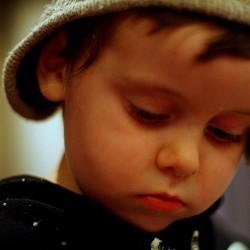
Children do not perceive mistakes the same way we do. They are oblivious to most social norms and cultural taboos. However, children have been found to have an understanding of right and wrong from as early as 19 months old^. I believe they can empathize from a much earlier age (depending on the emotional nourishment they received as infants).

The article below discusses how parents sometimes force their children to say “I’m sorry”. It’s a double mistake: first of all, the child is humiliated and secondly, the child doesn’t even understand the reason why the apology is made, hence damaging his or her understanding of the concept of being sorry:

http://www.janetlansbury.com/2009/12/youll-be-sorry/^

Around the same time I read this article, I also came across this beautiful poem about children. I think it is very much in the spirit of what the article says. Enjoy!


On Children

By Kahlil Gibran


Your children are not your children.
They are the sons and daughters of Life’s longing for itself.
They come through you but not from you,
And though they are with you yet they belong not to you.

You may give them your love but not your thoughts,
For they have their own thoughts.
You may house their bodies but not their souls,
For their souls dwell in the house of tomorrow,
which you cannot visit, not even in your dreams.
You may strive to be like them,
but seek not to make them like you.
For life goes not backward nor tarries with yesterday.

You are the bows from which your children
as living arrows are sent forth.
The archer sees the mark upon the path of the infinite,
and He bends you with His might
that His arrows may go swift and far.
Let your bending in the archer’s hand be for gladness;
For even as He loves the arrow that flies,
so He loves also the bow that is stable.”

I’ll end this post with this wise quote I found today. Again, something that just seems to fit right in:

“Respect the child. Be not too much his parent, but also his pupil…”

– Ralph Waldo Emerson

[ax_meta lnimgurl=’http://mentatul.com/wp-content/uploads/2018/09/03035-ChildrenAndApologies-Thumb.jpg’ lnimgw=’250′ lnimgh=’250′ title=’Children and Apologies’ desc=’Children do not perceive mistakes the same way we do. They are oblivious to most social norms and cultural taboos.’]

Salma Hayek and Harvey Weinstein

Weinstein’s disgusting behavior^ towards women triggered the famous #MeToo^ social media campaign. It’s all history now. There are some very good articles^ out there about Weinstein and other libidinous rich men^. There’s also the shocking leaked audio of the predator in action^.

In this eye-opening timeline^, we are shown how much things have changed because of the scandal that has rocked Hollywood, the world’s #1 exporter of corrupt cultural values. Thanks to #MeToo, the protest went global. I feel like women’s rights have made an important step forward since then.

But from all the articles I read, I took a particular liking to Salma Hayek’s story about the movie “Frida”, produced by Weinstein. This vulnerable, heart-felt story made me empathize with the victims more than anything else I read or heard on the topic:

https://www.nytimes.com/interactive/2017/12/13/opinion/contributors/salma-hayek-harvey-weinstein.html^

[ax_meta lnimgurl=’http://mentatul.com/wp-content/uploads/2018/09/03030-SalmaHayekHarveyFrida-Thumb.jpg’ lnimgw=’250′ lnimgh=’250′ title=’Salma Hayek and Harvey Weinstein’ desc=’Salma Hayek's story about the movie "Frida", produced by Weinstein.’]

This Year’s Dose of Horrible Behavior Towards Animals

How would you feel if some dudes would grab somebody dear to you from the comfort and safety of their home, tie that person to a car and drag them around town for a couple of miles? While doing this, of course, they would laugh, because torture is fun:

http://edition.cnn.com/2017/12/13/us/shark-dragged-video-arrests-trnd/index.html^

And then there’s this horrific way to celebrate students’ achievements: a jungle-themed prom where majestic wild animals are disrespected and psychologically tormented. This sets, of course, a wonderful example for the adults, parents and decision makers of tomorrow:

http://www.sun-sentinel.com/local/miami-dade/fl-reg-tiger-at-school-prom-20180514-story.html^

There’s a reason why I’ve timed this post to show up exactly after the one detailing how ants take care of their wounded^, which is yet another discovery from a long string of marvelous findings about the creatures living along side us on Earth. I’d like to create contrast between the amazing diversity and complexity of life on Earth and the lack of respect (many) humans show towards it.

My only comfort is that at least society is taking some action against such behavior. It’s a step in the right direction. I await the day when all of our children will respect wildlife and will leave it well enough alone.

[ax_meta lnimgurl=’http://mentatul.com/wp-content/uploads/2018/09/03025-HorribleBehaviorSharkDragging-Thumb.jpg’ lnimgw=’250′ lnimgh=’250′ title=’This Year's Dose of Horrible Behavior Towards Animals’ desc=’How would you feel if some dudes would grab somebody dear to you, tie that person to a car and drag them around town for a couple of miles?’]

Ants Take Care of Their Wounded

It’s impressive how creatures with a (much) smaller brain than ours are capable of complex behaviors such as taking care of their wounded. Could it be that instinct is smarter than being smart?

This is evolution at its best. As the main author of instinctual behavior refinement, evolution has given these ants an edge. Because they take care of their wounded, they could very well prevail should they get into a contest with other (ant) species:

https://www.i4u.com/2018/02/127173/ants-rescue-their-warriors-licking-their-wounds^

Here’s to more amazing finds about the ecosystem!

…And to less cruelty^ towards^ it^

[ax_meta lnimgurl=’http://mentatul.com/wp-content/uploads/2018/09/03020-AntsRescueWounded-Thumb.jpg’ lnimgw=’250′ lnimgh=’250′ title=’Ants Take Care of Their Wounded’ desc=’Because they take care of their wounded, these ants could very well prevail should they get into a contest with other (ant) species.’]

The Three Gates

Before you speak, let your words pass through three gates. At the first gate, ask yourself ‘Is it true?’ At the second gate ask, ‘Is it necessary?’ At the third gate ask, ‘Is it kind?’

This beautiful Sufi saying has been with me for several years now. I wanted to write a few words about it since quite some time ago. First of all, this is one of the best rules for life that I’ve ever encountered in any culture. I’d like to also paraphrase it as such:

Before you take any action, let your thoughts pass through three gates. At the first gate, ask yourself ‘Is it an honest action?’ At the second gate ask, ‘Is it necessary?’ At the third gate ask, ‘Is it kind?

Applying this throughout my life is, however, much more difficult than I could have ever imagined. I believe there’s a certain culture clash occurring here. I live in a culture where I need to stay competitive in order to make ends meet. In the same time, I have creative cravings that are incompatible with what society currently values (being a writer doesn’t pay much).

But then I should at least be able to live by these words at home, right? Or at least in how I treat myself. Well, it’s not that simple actually. Being constantly submerged in a certain culture (and exposed to all the behaviors that culture comes with) makes this very difficult.

I guess it’s time to invest in training my will and patience and my “cultural immune system”, whose duty is to filter out cultural elements that are preventing me from choosing my words and actions more wisely.

[ax_meta lnimgurl=’http://mentatul.com/wp-content/uploads/2018/08/03015-ThreeGatesSufi-Thumb.jpg’ lnimgw=’250′ lnimgh=’250′ title=’The Three Gates’ desc=’Before you speak, let your words pass through three gates. At the first gate, ask yourself 'Is it true?' At the second gate ask, 'Is it necessary?' At the third gate ask, 'Is it kind?'’]

My Wife Became a Mother in Sweden – Part 2 – Birthplan

This belongs to a series of 5 articles dealing with child birth and the medical system in Sweden – from both a man’s perspective but also from a woman’s perspective, thanks to direct input from my wife. The reasons for writing the series are presented on the start/summary page^ where all 5 articles are linked.

Regarding the birth itself, Crina’s opinions changed quickly in Sweden. In our home country of Romania, C-sections are very popular. That is not surprising because C-sections are fast and can be scheduled at a doctor’s whim. There are even wealthy Romanian mothers and trend-setters who consider natural childbirth as something primitive. This is the society we came from and I’ll leave it at that.

Sweden is at the completely opposite end of the spectrum. Here, if a mother asks for a C-section, it is not uncommon for the midwife to recommend some therapy sessions with a psychologist in order to address fears and misconceptions about natural childbirth. Luckily, Crina didn’t need that. She had renounced her fear of natural childbirth after her first few years of life here.

After the first couple of appointments, midwives will begin to talk to parents about their birth plan. They want parents to envision and think about this as early as possible, so that all concerns can be addressed well before the time comes.

The birth plan will be sent to the hospital where the woman gives birth, so that the midwives there are fully aware of what is the intended course of action, from the parents’ side, before the birth even begins! The birth plan is not only a very practical thing to do, but is also a powerful statement regarding the fact that the woman is entitled to have the birth she desires.

The birth plan contains things such as:

  • how to set up the room where the event will take place (light intensity, music to play, emotional support props such as clothing, items with emotional meaning, pillows and blankets)
  • decisional frameworks, such as the very useful BRAIN^ (what are the Benefits, what are the Risks, are there any Alternatives, what does your Instinct tell you, what if you do Nothing)
  • what to do if the baby is late to come out (we considered natural birth-inducers such as raspberry leaf tea)
  • what if the baby is in the wrong position (this is not a valid reason for a C-section in Sweden: there are midwives who are trained in changing the baby’s position through massage)
  • what pain relief methods to use. We were particularly interested in natural pain relief, that is, not based on heavy drugs. Here is an excellent list of natural pain relief options^.
  • what to do after birth? For example, what to do with the placenta? Some mothers keep it^.

When WinterKid was around 3 months old, we found out about hypnobirthing^. This method of childbirth consists of adopting and maintaining a state of calm throughout the birthing process. This allows the body to do what it can naturally do since forever, before humans started to interfere in the process and, worse of all, encourage interventions.

Don’t get me wrong here, we’re vaccinated adults. We’re totally not against well-documented medical procedures. But even though C-sections and other interventions have saved lives, they’ve become over-used due to cultural bias. We connected very well with the message of a calm, natural birth, so we went on this route from the very beginning.

Hypnobirthing is based on the undeniable fact that the human body is, in general, naturally equipped to deal with childbirth safely, and perhaps even painlessly. And speaking of painless, were you aware of birthgasms^?

Crina started and completed an excellent hypnobirthing course by Australian Kathryn Clark^. The first chapter of her Hypnobirthing Home Study Course has amazing value even for those that don’t care about hypnobirthing. It tackles one of the most terrible cultural trends that is currently very popular in our so-called developed countries: the very fact that having a baby is handled as some sort of disease.

In popular culture, childbirth is advertised as a horribly painful experience. Nowhere is it mentioned that perhaps a woman’s screams during child birth could be a pure manifestation of her primal instincts. Spoiler: they usually are, but more on that in Part 2 of this story.

Crina listened (often together with me) to audio tapes containing visualization exercises. These harnessed the power of imagination with the purpose of removing negative thoughts and reaching a state of deep calm. In the book I mentioned above there’s also a very useful chapter for the mother’s birthing partner.

Important: having a child is not a sickness. In several developed countries they support home birthing and they discourage the intervention in the natural process. Sweden is one of those countries. Here, there are no doctors present during childbirth unless warranted by a complication. It is just the mother and her offspring, usually the husband, and a midwife (sometimes two). There are, however, changes in how the mother is advised by the midwife throughout the birth process, depending on the hospital one chooses. We went to Information Evenings for two of the main hospitals here in Stockholm. At the large Southside Hospital, they were quite balanced in their approach, while at BB Stockholm, they seemed to be slightly biased towards natural childbirth (they try to refrain from interventions unless there are insurmountable difficulties).

Because hypnobirthing taught us that the more one intervenes during childbirth the less control the body has, we decided to have the hospital in Danderyd as our first option. There is no guarantee that there is room for a mother to give birth at a given hospital, in which case she will have to go to another hospital. Danderyd actually has two maternity wards: a state-owned one and the privately-owned BB Stockholm (which we picked), located in the same building.

Now let’s discuss the sensitive topic of interventions. The most important thing that we learned after attending our first and only birthing course in Stockholm (focused on hypnobirthing) was that it is risky (if not outright dangerous) to interfere with the body’s management of the birth. There is something called the cascade of interventions^). It often happens that the more humans interfere with the process of birth, the more chaotic it gets.

There is proof that the child signals^ that the birth can begin. Therefore, when humans try to hurry this up through invasive procedures, there is a higher probability of things not going well, because the child is, of course, taken by surprise.

When it comes to heavy anesthetics such as the epidural or spine injection, these heavily interfere with the body’s ability to trigger and direct waves and surges (aka contractions) with the right timing and intensity. They decrease in frequency and the mother also cannot feel how much to push. What doctors do then is to administer artificial oxytocin^ in order to speed up the waves and surges. That leaves the mother pretty much in the hand of chemicals and circumstances out of her control.

Don’t get me wrong: it is very important that the mother can go ahead with the birthing, so these chemical remedies do have their uses. But because of the cultural influence I mentioned earlier, people today have become rather trigger-happy when it comes to interventions. I am happy to be able to base my “non-intervention statements” on the official stance of Sweden and several other developed countries when it comes to childbirth: let the body do what it does best and don’t mess with things if you don’t have to.

Important: the female body is built to give birth. Special cases aside, most women are equipped to give birth naturally, sometimes painlessly. There are cases of even having an orgasm during childbirth. The most important thing during childbirth, by far, is for the woman to trust her body and to have next to her proper emotional and professional support.

Another major plus for Sweden is that they suggest mothers to breastfeed rather than rely on dubious commercial products. During the autumn we attended a breastfeeding course. Much to our surprise, the instructor was none other than Erika, our first midwife. We were happy to meet each other again. She told us that her daughter had experienced some serious heart problems, which is why she had been on extended sick leave.

The course was quite useful, given how important it is to breastfeed correctly from the very beginning. We knew that the first weeks of the baby’s life are critical for building healthy feeding habits. Both Crina and I wanted to be well-prepared for the challenge. Even if men can’t breastfeed, as partners, we can at least absorb as much information as we can.

As our due date approached, we tried to not care about due dates. Studying natural birthing methods had taught us that the concept of being “overdue” is often applied wrongly. If the child takes its time to come out then it is perhaps for a reason and the woman shouldn’t be treated as some sort of product that has exceeded its shelf life. In Sweden, they wait up to 2 weeks for the birth to start before even considering to interfere.

Throughout the 9 months we obviously talked to a lot of people about children. Friends, work colleagues, family, random people. I was slightly annoyed with the general tendency to warn parents about the upcoming child as if some sort of professional catastrophe is about to happen. This usually comes in the guise of various jokes, but through repetition, it transforms into a sort of nasty noise. I soon learned to block the transmission of such experiences. I often interrupted such people and told them that I choose to see things differently.

Important: surround yourself and your family with positive energy. All parents around you want to share baby stories, but try to focus on the positive ones while you are withbaby and perhaps even after birth. Return the favor: tell a future parent only the best of what you experienced, build hope, build confidence!

Winter arrived and we set up our home for Christmas. The first snow came and melted in a week or so, but Crina still managed to go together with WinterKid for a few walks through snow-chocked sidewalks.

Because we had chosen a hospital that was in another area of Stockholm, we were slightly worried that traffic might be a problem when driving towards that location. The motorway towards the hospital is chocked during rush-hours (roughly 6 hours per day). We were discussing this on a Friday evening, during late January, when we were returning from a beautiful dinner in Uppsala, also located north of Stockholm. We had enjoyed some spicy African food in the company of some of our closest friends here in Sweden. Spicy food is rumored to induce labor. There was one week left until the due date.

[ax_meta lnimgurl=’http://mentatul.com/wp-content/uploads/2018/08/03008-Miruna-Thumb.jpg’ lnimgw=’250′ lnimgh=’250′ title=’My Wife Became a Mother in Sweden – Part 2 – Birthplan’ desc=’In Sweden, if a mother asks for a C-section, it is not uncommon for the midwife to recommend some therapy sessions with a psychologist.’]

Mentatul Switched to A2Hosting

After about 13 years with the same web hosting company (IX Web Hosting, over in the USA), it’s time to move on. IX has been purchased by the infamous EIG. I didn’t know exactly how infamous they are, but I did notice when the quality of service instantly decreased to a staggering degree. Not only was the migration of my websites handled in an unprofessional way, with stuff breaking all over the place, but support answering times had increased to more than 48 hours. Sometimes, I’ve waited for 4-5 days for them to answer my tickets.

This led me to document myself a bit about Site5, the company which presumably had acquired IX. Well, guess what… Site5 is just a cover for a larger entity called EIG. In the experienced webmaster’s world, EIG are known to be among the worst hosting providers. It’s not that the performance is bad, but it’s definitely sub-par with the prices they ask while the answering times, professionalism and support staff attitude is also way below the competition.

What’s truly wicked about EIG is their insidious and aggressive strategy of purchasing web hosting providers with a good name. They get their customers and unfortunately, many of these customers stay in the EIG world even if they try to switch to another provider, simply because EIG controls a HUGE number of brands (about 70 at the time of this writing).

To see what all this is based on, please read this review of EIG:

EIG Review

Fortunately, this spring when the acquisition occurred, I just had about 4 months left in my contract. During the past week I’ve been busy migrating all my websites over to A2Hosting^, after a review of 2 other web hosts. The migration went fine and A2Hosting support staff & performance is way up there while the price I got for my first 2 years of hosting is really good. Even better, the site is now hosted in Europe.
I wish A2Hosting stays away from EIG!

[ax_meta lnimgurl=’http://mentatul.com/wp-content/uploads/2018/08/03317-MentatulChangingHosting-Thumb.jpg’ lnimgw=’250′ lnimgh=’250′ title=’Mentatul Switched To A2Hosting’ desc=’Stay away from EIG web hosting.’]

Free Bleeding (Menstruation)

Even though it’s obvious that such a practice exists, living with free bleeding in the “civilized” world (read: “taboo world” or “rigid culture world”) can be tricky. What is free menstruation you ask? Well, here’s an interesting read:

https://helloclue.com/articles/culture/whats-all-fuss-about-free-bleeding-why-does-it-matter^

Do I have an opinion about the practice? No! But I do have an opinion about people who make a fuss out of this: oh yes!

It’s another person’s body and clothes. That person is allowed to do whatever they want as long as they are careful to not interfere with another’s property (and this covers hygiene too). So, as long as this is a private matter of the person, society cannot interfere. And just to be clear: if you see a blood stain between a woman’s legs and you don’t like it, look away. It’s not anybody’s right to dictate how other people dress or look.

[ax_meta lnimgurl=’http://mentatul.com/wp-content/uploads/2018/08/03003-FreeMenstruation-Thumb.jpg’ lnimgw=’250′ lnimgh=’250′ title=’Free Bleeding (Menstruation)’ desc=’Even though it's obvious that such a practice exists, living with free bleeding in the "civilized" world (read: "taboo world" or "rigid culture world") can be tricky.’]

Pesticides Harming Bees Banned in Europe – Major Win for Our Ecosystem

Good news is even better when it arrives unexpected. In a major win for our ecosystem, the European Union has banned the use of neonicotinoids^. Other than the fact that the use of such poison is another example of arrogant human interference in the environment, this category of pesticides is destroying bee colonies^ worldwide. Bees are responsible for pollinating^ a majority of our crops, so a major bee die-off would seriously impact our food supply. When it comes to respecting our ecosystem, it’s lovely how Europe leads the way!

https://www.theguardian.com/environment/2018/apr/27/eu-agrees-total-ban-on-bee-harming-pesticides^

[ax_meta lnimgurl=’http://mentatul.com/wp-content/uploads/2018/08/02998-NeonicotinoidsBeesSaved-Thumb.jpg’ lnimgw=’250′ lnimgh=’250′ title=’Pesticides Harming Bees Banned in Europe – Major Win for Our Ecosystem’ desc=’In a major win for our ecosystem, the European Union has banned the use of neonicotinoids.’]